Abstract
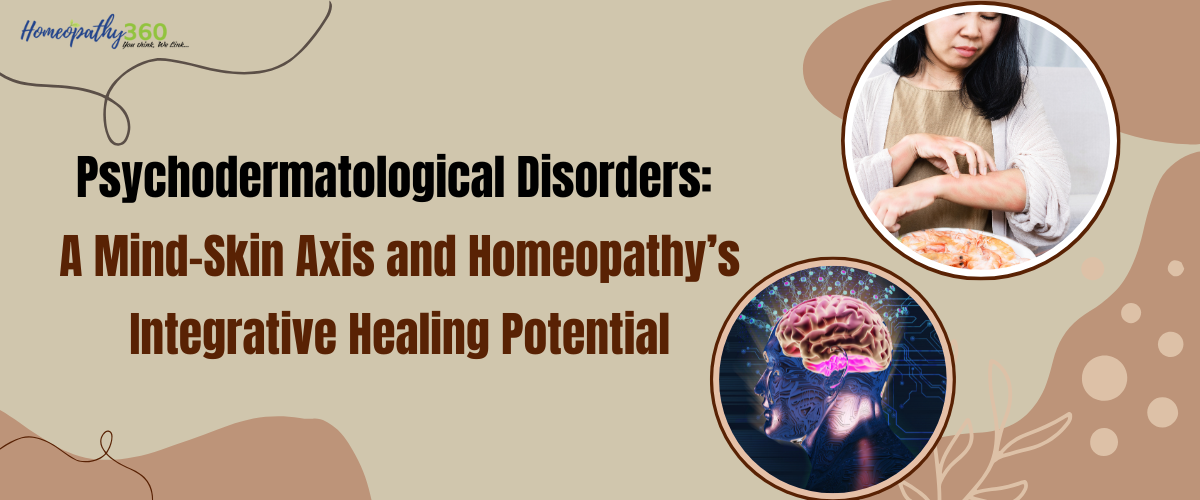
Psychodermatology is a growing interdisciplinary field exploring the connection between emotional and psychological states and dermatological manifestations. The mind-skin axis, mediated by neuroendocrine and immune pathways, plays a crucial role in the exacerbation or persistence of skin conditions such as psoriasis, eczema, and acne. While conventional medicine often isolates symptoms, Homeopathy offers a holistic framework to address the psychosomatic origin of dermatological diseases. This article investigates epidemiology, clinical picture, diagnostic understanding, and a Homeopathic approach to managing psychodermatological disorders. It presents 15 well-indicated remedies and outlines a comprehensive management strategy that aligns with the patient’s emotional, physical, and constitutional state.
Keywords Psychodermatology, Homeopathy, Mind-Skin Axis, Stress-induced dermatoses, Holistic medicine, Individualization, Psoriasis, Anxiety, Natrum mur, Ignatia
Epidemiology
Globally, up to 30–40% of dermatological patients show a significant psychological component to their skin condition. Psychodermatoses are more prevalent in women and young adults, with stress, anxiety, and trauma being common precipitating factors. Increased awareness and urban lifestyle stressors contribute to a rise in cases. Common psychodermatological conditions include trichotillomania, stress-induced urticaria, neurodermatitis, acne excoriée, and delusional parasitosis.
Introduction
The skin is not merely a physical barrier but a sensory and emotional interface. Psychodermatological disorders represent conditions where psychological imbalances manifest as cutaneous symptoms or where chronic skin issues induce psychological distress. This complex interplay is explained by the mind-skin axis, involving the hypothalamic-pituitary-adrenal (HPA) axis, cytokines, and neurotransmitters. Homeopathy, with its mind-body-soul orientation, is uniquely poised to address such complex disorders. This article presents an integrative view of these disorders and highlights the importance of individualized Homeopathic prescriptions.
Clinical Features
Common signs and symptoms observed in psychodermatological disorders include:
– Chronic itching without primary skin pathology
– Erythema aggravated by emotional triggers
– Exacerbation of psoriasis or eczema with stress
– Compulsive skin picking or hair pulling
– Acne flare-ups during emotional turmoil
– Sleep disturbances due to pruritus
– Psychosocial withdrawal due to visible lesions
– Co-existing depression, anxiety, or OCD-like behavior
Diagnosis
Diagnosis includes a combination of dermatological examination and psychological assessment:
– Detailed case history including emotional traumas, stressors
– Dermatoscopy to rule out organic skin conditions
– Psychometric tools (e.g., HAM-A, PHQ-9) for anxiety and depression
– Skin biopsy only if necessary to confirm exclusion diagnoses
– Observation of the psychosomatic pattern in symptom evolution
Homeopathic Approach
Homeopathy aims to treat the person in totality, recognizing the emotional background of disease. Each remedy is chosen after studying the mental, emotional, and physical constitution of the patient. Psychodermatoses are often linked with psoric or sycotic miasmatic influences, and remedy selection must include the patient’s response to stress, sleep pattern, dreams, suppression history, and modalities.
Fifteen Indicated Homeopathic Medicines
- Natrum muriaticum – Ailments from grief, suppressed emotions, greasy or cracked skin.
2. Ignatia amara – Acute emotional shocks, variable skin eruptions with sighing and mood swings.
3. Psorinum – Dirty-looking skin, chronic eczema worsened by cold, anxiety-ridden personalities.
4. Sulphur – Philosophical thinkers, egotistic, itching worse at night, aversion to bathing.
5. Calcarea carbonica – Cold, sweaty skin, sluggish metabolism, fear of mental breakdown.
6. Lycopodium – Digestive and emotional complaints, chronic urticaria, timid yet irritable.
7. Arsenicum album – Burning eruptions, obsessive personalities, restlessness.
8. Staphysagria – Humiliated, suppressed anger, skin diseases following insults or abuse.
9. Thuja occidentalis – Warty eruptions, oily skin, fixed ideas, low self-worth.
10. Phosphorus – Sensitive, easily influenced, prone to acne with bleeding tendencies.
11. Silicea – Slow healing skin, timid, delicate personalities, recurrent abscesses.
12. Anacardium orientale – Split personality feeling, compulsive habits, itching aggravated by stress.
13. Sepia – Hormonal dermatoses, indifferent, worn-out personalities with ringworm, chloasma.
14. Hepar sulphuris – Over-sensitive to touch, cold air, boils or acne with pus formation.
15. Kali bromatum – Acne with mental agitation, sleeplessness, memory loss, and nightmares.
Homeopathic Management
– Holistic Case Taking: Includes emotional traumas, stress responses, aggravating situations.
– Totality of Symptoms: Physical + emotional + pathological changes must be integrated.
– Miasmatic Analysis: Helps in long-term skin conditions to understand depth and recurrence.
– Potency Choice: Chronic cases may benefit from 200C and above; hypersensitive cases from LM scale.
– Lifestyle and Counseling: Complementary strategies like journaling, meditation, and balanced diet.
– Avoid Suppression: Steroid creams or psychiatric medications must be reviewed cautiously.
– Follow-ups: Frequent follow-ups are vital in understanding remedy response and layer removal.
Conclusion and Summary
Psychodermatological disorders are an intersection of dermatology and psychiatry, demanding a multidimensional treatment approach. Homeopathy, grounded in the principles of individualization and constitutional prescribing, holds immense potential to address these complex disorders. Remedies not only relieve the physical manifestations but also calm the underlying emotional disturbances, offering a truly curative pathway. With increasing stress in modern lifestyles, Homeopathy offers a gentle yet profound solution to restore equilibrium in both mind and skin.
References
- Rajan Sankaran. The Spirit of Homeopathy
2. Allen H.C. Keynotes and Characteristics with Comparisons
3. Kent J.T. Lectures on Homoeopathic Materia Medica
4. Journal of Psychodermatology (2022)
5. WHO Global Skin Disease Report (2023)
6. Boericke W. Pocket Manual of Homeopathic Materia Medica
7. Vithoulkas G. Levels of Health
8. DermNet NZ. Psychodermatology Overview
9. Homeopathic Clinical Case Studies – Central Council for Research in Homoeopathy
10. Masi-Elizade Theory on Constitutional Typology