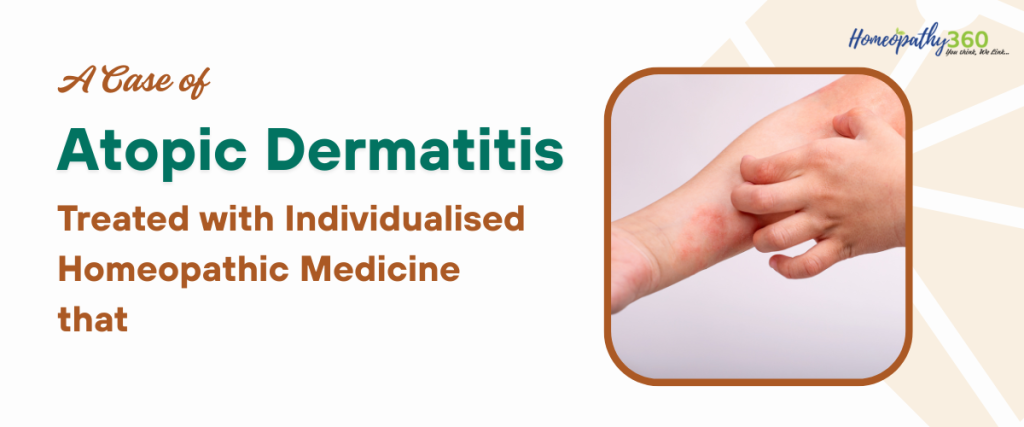
A Case of Atopic Dermatitis Treated with Individualised Homeopathic Medicine
Abstract :
Atopic dermatitis is a chronic skin condition characterized by surface inflammation, redness, itching, and dryness of the skin. Conventional treatment typically includes the use of emollients and topical corticosteroids to manage symptoms and prevent flare-ups.This case report presents an 11-year-old female patient who exhibited itching and dryness of the skin, primarily affecting the forearm and scalp. Instead of the conventional approach, the patient was treated solely with the homeopathic remedy Petroleum, without the use of emollients or topical steroids.The patient’s condition showed marked improvement following the administration of Petroleum. This evidence-based observation supports the fact that petroleum has a positive role in the treatment of atopic dermatitis.
Introduction
Dermatitis encompasses a range of skin conditions characterized by inflammation, leading to symptoms like redness, itching, and dryness. It’s not contagious but can be uncomfortable and may require ongoing management.
Common Types of Dermatitis
Atopic Dermatitis (Eczema)
A chronic condition often beginning in childhood, marked by dry, itchy, and inflamed skin. It commonly affects the folds of the elbows, behind the knees, and the front of the neck. Flare-ups can be triggered by environmental factors, allergens, or stress.
Contact Dermatitis
Occurs when the skin reacts to direct contact with an irritant or allergen. Symptoms include redness, itching, and sometimes blisters. Common triggers are soaps, detergents, cosmetics, and certain metals like nickel.
Seborrheic Dermatitis
Affects oily areas of the body, such as the scalp, face, and upper chest. It’s characterized by red skin, scaly patches, and dandruff. In infants, it’s known as cradle cap.
Dyshidrotic Dermatitis
Involves the development of small, itchy blisters on the edges of the fingers, toes, palms, and soles. Triggers include stress, allergies, moist hands and feet, and exposure to certain metals.
Nummular Dermatitis
Characterized by coin-shaped spots on the skin that are often itchy and well-defined. It can be triggered by dry skin, insect bites, or skin inflammation.
Neurodermatitis
Starts with an itchy patch of skin, often on the neck, wrist, forearm, thigh, or ankle. Scratching makes the itch worse, leading to a cycle of chronic itching and scratching.
Stasis Dermatitis
Occurs on the lower legs due to poor circulation, leading to swelling, redness, and scaling. It’s often associated with varicose veins and can lead to ulcers if untreated.
Causes and Triggers
Dermatitis can result from a combination of genetic factors, immune system dysfunction, environmental exposures, and stress. Common triggers include: Irritants: soaps, detergents, solvents
Allergens: nickel, fragrances, certain plants ,Microorganisms: bacteria, fungi, viruses, Stress and hormonal changes
Climate: cold, dry air or excessive humidity.
Case Summary
Patient name – xyz
Patient Profile: 11-year-old female
Chief Complaint: Persistent, intensely itchy skin eruptions, dry skin ,itching specially at night sometimes watery or bloddy discharge from lesions , worse at winter.
History of Present Illness:
The patient presents with chronic skin eruptions characterized by intense itching.Scratching provides temporary relief but leads to skin rashes scratch untill it bleed marks over forearms. The skin is notably dry, scaly, and exhibits excoriations primarily on the upper and lower limbs.Minor scratches often result in suppuration,
Physical Examination:
Dry, scaly patches with visible scratch marks on both upper and lower extremities..Signs of secondary infection in some lesions, such as pus formation.
Mental general – patient get irritated very easily during talking and get angry over small things , Patient looking Confused during case taking while asking any question ,Marked Fear of cold and thunderstorm Offended easily when her parents try to correct her mistakes
Thermal – chilly
Thrust – 2-3 lt /day
Sleep- sound sleep, dreams not remember
Appetite – normal
Aggravation – thunderstorm and winter
Amelioration – scrating , rubbing
RUBRICS
MIND – CONFUSION of mind
MIND – IRRITABILITY
MIND- OFFENDED , easily
SKIN – ERUPTION -bleeding
SKIN – ERUPTION- burning
SKIN -ERUPTION – discharging thin
SKIN – ERUPTION -pustules
SKIN – SEASON – winter aggravation
REMEDIES SELECTION –
Based on the totality of symptoms and repertorisation, the remedies that covered the maximum rubrics included Petroleum, Sulphur, Psorinum, and Dulcamara. Among these, Petroleum was selected as it covered the highest number of rubrics and was found to be the most suitable similimum for the case.
PRESCRIPTION –
Rx
Petroleum 200 – One dose daily on an empty stomach for 7 days
Follow-up Visit: Patient showed slight improvement
– Petroleum 200 – Single dose given
– Sac Lac 30 – Once daily for 15 days
Subsequent Follow-ups:
Continued regular visits over 2 months
Proper case management and maintenance of hygiene.
Before treatment:


After treatment:

Complete relief from all symptoms
Discussion – “This case highlights the effectiveness of homeopathy in treating chronic atopic dermatitis, particularly when the symptoms closely align with a specific remedy profile.
Petroleum 200 was prescribed once daily on an empty stomach for 7 days. At the next visit, the patient reported slight improvement. A single dose of Petroleum 200 was then administered,
followed by Sac Lac 30 once daily for 15 days. With regular follow-up, proper medication, and maintenance of hygiene, the patient experienced complete relief from all symptoms.
Conclusion – This case demonstrates the effectiveness of individualized homeopathic treatment, with Petroleum 200 playing a key role in managing atopic dermatitis. Consistent follow-up, appropriate remedy selection, and adherence to hygiene measures contributed significantly to the patient’s complete recovery.
ABOUT THE AUTHOR:
DR. GAYATRI SAINI – MD scholar Homeopathic pharmacy
Govt. Homeopathic medical college and hospital bhopal m.p.
UNDER THE GUIDANCE OF:
Dr. Chetna pandey
( HOD and professor of homeopathic pharmacy)
Dept of homeopathic pharmacy