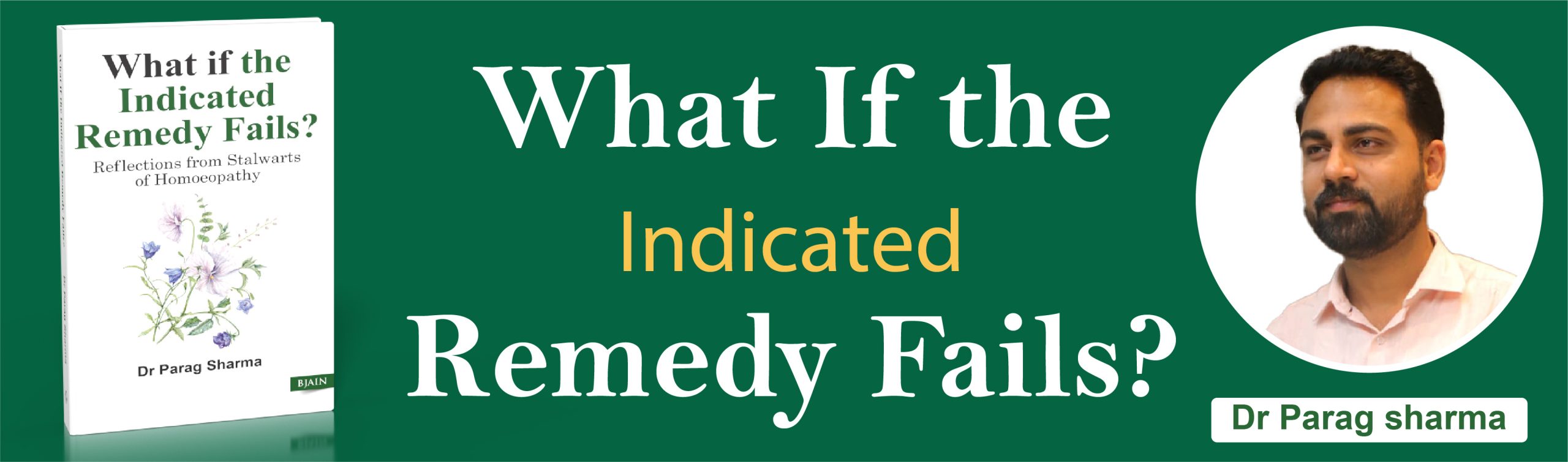
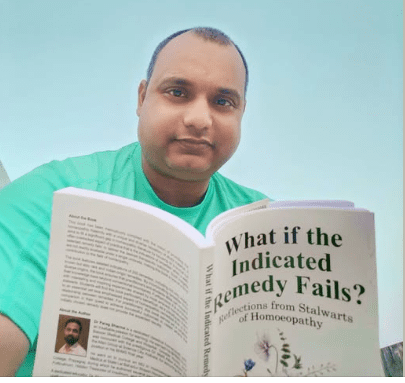
This book arrives as a meticulous compilation of scrupulously documented indications of remedies to be considered when a well-selected remedy fails to deliver the desired therapeutic outcome. A unique and diverse repository of study material for UG, PG students and practitioners of homoeopathy, this book authored by Dr Parag Sharma fills a significant gap in homoeopathic literature, focusing on a crucial yet overlooked aspect of homeopathic practice.
For practitioners, this book serves as a reliable companion in their quest to achieve successful outcomes in cases where the initially chosen remedy does not provide the expected results.
What makes this book a one-of-a-kind contribution to the homeopathic fraternity is the usual unavailability of such important insights under one umbrella.
Key Features:-
- An account of 255 remedies with their key symptoms and similarities, and contrasts with similar remedies.
- Intriguing anecdotes from myriad stalwarts on their own clinical experiences with remedies that helped when the most indicated ones failed.
- A systematic exploration of remedy relationships, complementary prescriptions and alternative approaches when well chosen remedy fails.
- Simple language and systematic arrangement of remedies, references, cross references, and cases make this book a ready reckoner for both students and practitioners.

Title: What If the Indicated Remedy Fails?
Author: Dr Parag Sharma
ISBN: 9788131999424
Imprint: B Jain Regular
Pages: 196
Format: Paperback
Language: English
The book features detailed indications of 255 remedies including commonly used, Indian origin and rare drugs. Furthermore, it is enriched with interesting and inspiring experiences shared by most eminent homoeopathic stalwarts on utilizing different remedies when one well-selected remedy fails. The literature also gives an insight into the relationships that these remedies bear with each other.
Dr. Parag Sharma’s What If the Indicated Remedy Fails? is a one-of-a-kind resource—thought-provoking, clinically insightful, and academically enriching. It is a must-read for every homeopathic physician who aims to refine the art of prescription and enhance the success of treatment outcomes. By illuminating what to do when the expected does not happen, the book opens the door to deeper reasoning, better decision-making, and more consistent clinical success. Overall, this book fills an important gap in homoeopathy by bringing together under one roof the strategies, insights, and clinical wisdom needed when treatment outcomes do not align with expectations. A must-read for every serious homeopathic clinician.
Dr. Nayeemunnisa Begum
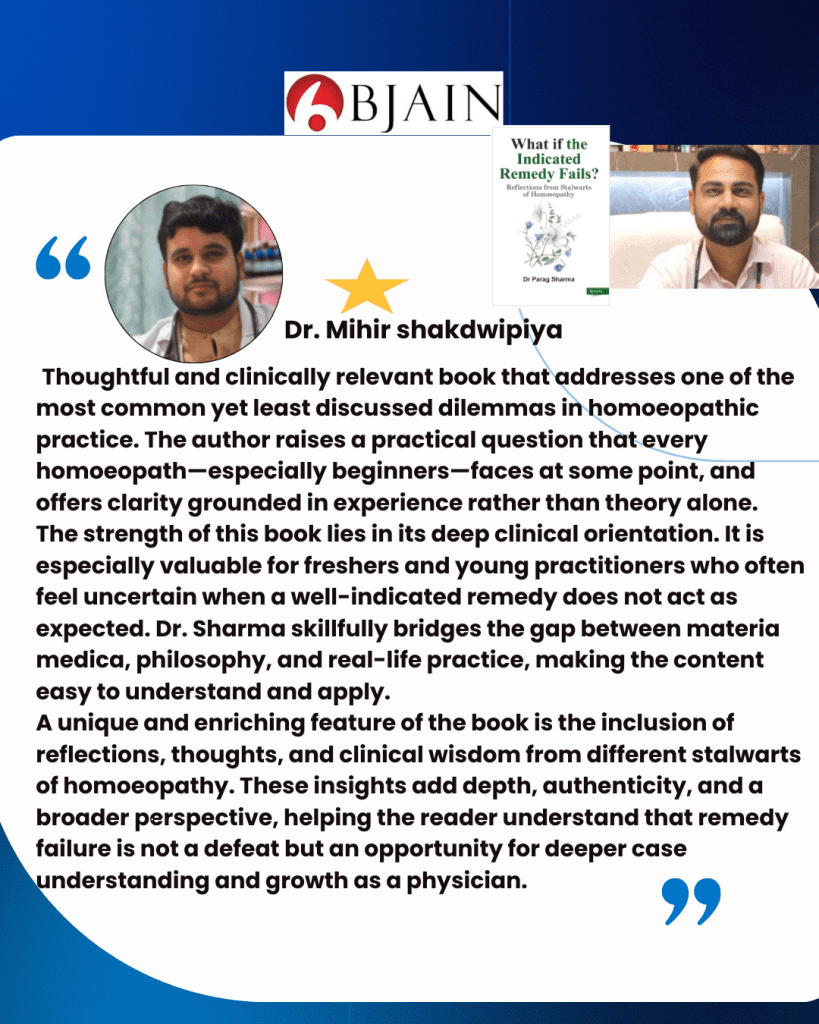
When a well-selected remedy doesn’t give results… what next?
Dr. Mihir Shakdwipiya shares his experience of reading the brilliantly written book by Dr. Parag Sharma — a book he calls a true guiding ray for every homeopath facing this very challenge.
A must-read for practitioners seeking clarity, direction, and confidence in difficult cases.
Dr. Deepak Tiwari
“Study is important for thought and for finding various solutions to a single problem…… and it is also necessary for updation”. keep going , keep study
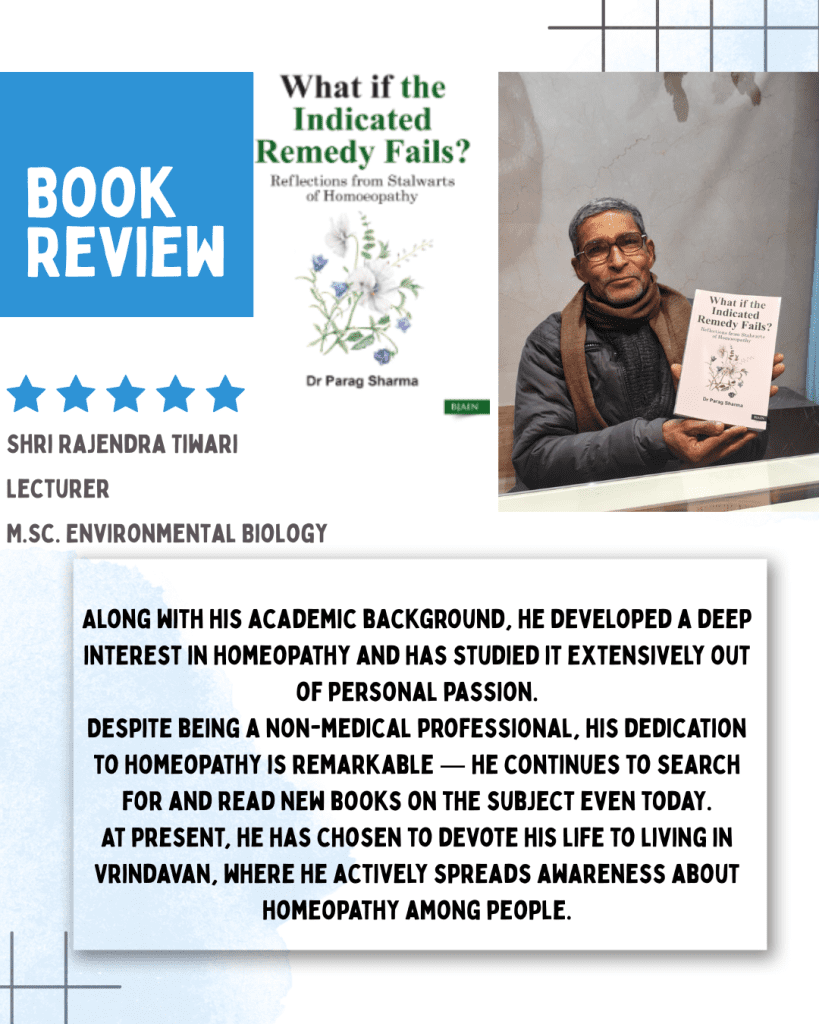
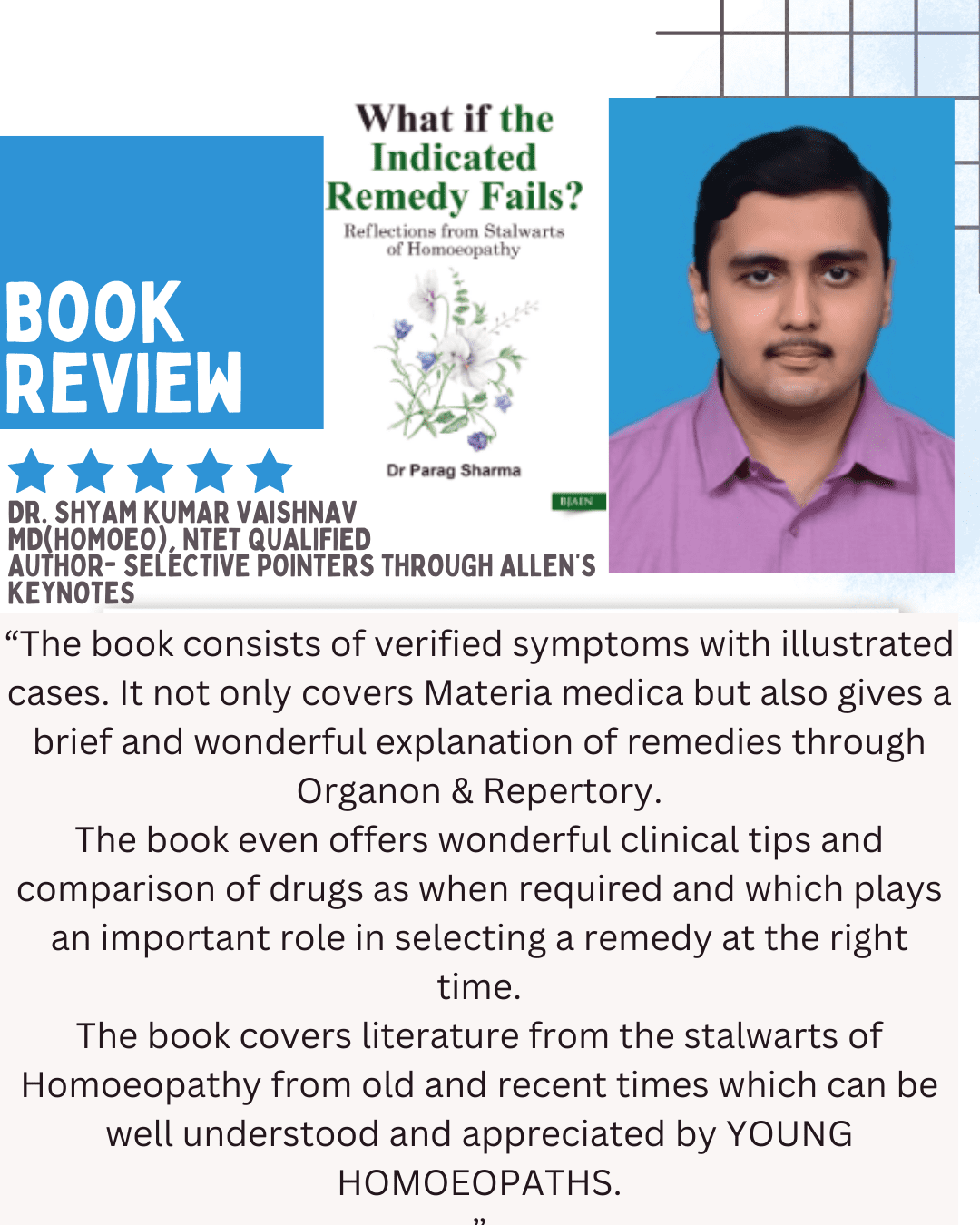
1. What inspired you to write a book on a subject that is rarely addressed in homeopathic literature, What if an indicated remedy fails ?
“During my MD studies at State Lal Bahadur Shashtri Homeopathic Medical College, Prayagraj (2018-2022), I extensively studied homeopathic literature, including classic and contemporary works. I noticed that while authors provided indications for remedy selection and suggestions for alternatives when a remedy fails, they often lacked explanations for the underlying reasoning. This sparked an idea to compile a comprehensive resource that not only provides indications but also elucidates the logic and principles behind remedy selection and substitution. My goal was to create a practical guide for clinicians and students, enabling them to make informed decisions when faced with challenging cases. This book aims to fill the gap in existing literature by providing a detailed understanding of remedy relationships, similarities, and differences, ultimately facilitating more effective treatment outcomes.”
Moreover, in today’s fast-paced world, where patients are seeking quick relief from lifestyle disorders, the pressure on practitioners to deliver effective treatment is immense. When an indicated remedy doesn’t work, patients often lose faith and may abandon treatment. In such cases, having access to well-reasoned alternative remedy indications can be invaluable. It can broaden our therapeutic approach, enabling us to make patients feel better more quickly. This book aims to bridge the gap between traditional homeopathic knowledge and the demands of modern practice, empowering practitioners to provide faster and more effective care without compromising the principles of homeopathy.
2. The book contains clinical experiences from several homeopathic stalwarts. How did you gather these anecdotes, and how did their insights shape the final manuscript ?
“While pursuing my MD in Homeopathic Materia Medica, I extensively studied the works of renowned homeopaths like Farrington, NM Choudhary, CM Boger, SK Ghosh, SC Ghosh, ML Tyler and EB Nash. I found that their writings contained valuable clinical experiences and indications scattered across various books. However, in today’s fast-paced
practice, when an indicated remedy fails, finding logical explanations for selecting an alternative can be challenging.
Inspired by these stalwarts, I began collecting and compiling indications from their works, validating them through my own clinical experiences.
During my visit to the National Institute of Homoeopathy, Kolkata, Dr. Subhash Singh, the then Director, emphasized the significance of evidence-based practice in our PG seminar. He stressed that any information shared in the medical field should be backed by credible sources and rational reasoning. This advice resonated with me, and I have endeavoured to incorporate this approach in compiling this book.
This book is a culmination of those efforts, presenting compiled indications from various homeopathic stalwarts in a designed format. It provides explanations for remedy selection, highlighting similarities and differences between drugs. The book aims to facilitate quick and informed decision-making for practitioners, offering a valuable guide when faced with challenging cases.
By sharing clinical experiences and logical reasoning, this book empowers practitioners to make informed choices, while ultimately leaving the final decision to their clinical judgment.”
3. In your experience, what are some of the most common reasons a well-selected remedy might fail — and how can practitioners better navigate these situations ?
When a well-selected remedy fails to produce the desired results, it’s essential to reassess the case and identify potential obstacles. These obstacles can include patient-specific factors such as lifestyle, stress levels, and underlying pathology, as well as remedy-related issues like potency, dosage, and repetition. The complexity of the case, including multiple diseases or deep-seated pathology, can also impact treatment outcomes. Additionally, obstacles to cure, such as physical, emotional, or miasmatic obstacles, can hinder the remedy’s action. In some cases, diseases may be incurable, and management of symptoms becomes the primary goal. A patient’s underlying susceptibility and miasmatic background can also influence treatment outcomes.
To navigate these challenges, practitioners must develop strong case-taking and analysis skills to accurately identify the underlying causes of the disease and select the most appropriate remedy. Considering patient individuality is crucial, as each patient’s unique characteristics and circumstances must be taken into account. A deep understanding of the complex relationships between disease states, patient characteristics, and remedy responses is also essential. By adapting their approach based on the patient’s response and changing circumstances, practitioners can optimize treatment outcomes. In cases where cure is not possible, managing symptoms and improving quality of life becomes the primary goal.
4. How do you envision this book being used in daily practice? Is it more of a reference guide, a teaching tool, or a case-solving companion?
“This book is envisioned to serve as a multifaceted resource in homeopathic practice, functioning as a reference guide, teaching tool, and case-solving companion. Its primary utility would lie in facilitating the selection of similar remedies in cases where the initial remedy fails to yield the desired outcome. By providing a comprehensive analysis of remedy similarities and differences, it would enable practitioners to navigate therapeutic impasses and explore alternative treatment strategies.
From a pedagogical perspective, the book would contribute to the clinical learning of homeopathic practitioners by elucidating the nuances of remedy differentiation, symptomatology, and therapeutic applications. It would also provide insights into lesser utilized remedies, including indigenous drugs, organopathic drugs, sarcodes, nosodes and tautopathic drugs thereby expanding the practitioner’s therapeutic armamentarium.
In complex cases requiring nuanced treatment approaches, the book could serve as a case solving companion, offering guidance on the sequential application of remedies. By integrating this knowledge into clinical practice, practitioners can enhance and optimize treatment outcomes, and advance the field of homeopathy through evidence-based practice.”
5. Looking back on your own clinical journey, is there a particular case that made you realize the importance of having a backup remedy strategy — one that ultimately inspired part of this book ?
“Looking back on my clinical journey, I can recall numerous cases that underscored the importance of having an alternative strategy. There have been many instances where the first prescribed remedy didn’t yield the desired outcome, and I had to switch to a different approach.
For example, when Lycopodium didn’t work as expected, switching to Chelidonium often led to better results. Similarly, in cases where Tuberculinum showed partial action, I found DPT Nosode or Saccharum album to be helpful. In chronic tonsillitis cases, Diptherinum was often beneficial when the indicated remedy reached a standstill. Additionally, in cases of fibroids, Epihysterinum proved effective when the apparently indicated remedy didn’t work.
I’ve also found Foliculinum to be a valuable remedy in cases where the indicated remedy didn’t yield fruitful results. My interest in Foliculinum was sparked by studying literature by Dr. Dorothy J. Cooper and cases by Dr. L. M. Khan. Furthermore, my experiences with Hamamelis has been particularly noteworthy especially in cases of wounded pride and my interest was further deepened by studying the cases of Dr. V. Krishnamurthy, which made me appreciate the significance of phrase “wants the respect due to me shown’’ as aptly mentioned by Dr. Phatak in his Materia Medica.
These collective experiences have inspired me to compile this book, which aims to provide practitioners with a comprehensive resource to navigate complex cases and identify effective remedy strategies, ultimately enhancing patient care and treatment outcomes.”
6. What is the one key piece of advice you would offer to students or practitioners when they encounter a situation where a well-indicated remedy fails to produce the expected results ?
When a well-indicated remedy appears to fail, I would advise students and practitioners to reassess their approach. The remedy may not be truly indicated if it’s not yielding the desired results. Instead, we should consider it an ‘apparently indicated’ remedy.
In such cases, it’s crucial to identify the underlying reasons for the remedy’s failure. This could be due to errors in case taking, case analysis, totality formation or rubric selection. Alternatively, it might be related to obstacles to cure, the patient’s pathology, or the case’s curability.
To overcome this challenge, one should first correct their approach to case analysis and remedy selection. If the approach is sound, the selected remedy is likely to be well-indicated.
When faced with such situations, even after thorough case taking and analysis, one can explore various approaches to identify the underlying issues or consider alternative remedies. This book aims to provide a broader perspective on such approaches, enabling practitioners to find new avenues for effective treatment. By understanding the reasons behind the apparent failure and adopting a more nuanced approach, practitioners can improve their clinical outcomes and provide better patient care.
Dr. Parag Sharma was born in sacred city, Vrindavan, Uttar Pradesh, in 1994, where his family’s legacy in Homoeopathy began. His father Dr. Vijay Sharma, is a renowned homoeopathic practitioner in Vrindavan with 44 years of experience. He grew up witnessing the miraculous cures by his father achieved with homoeopathy.
This exposure sparked his interest in pursuing homoeopathy as a career. During his college years, he was fortunate to have Dr. Anuroopam Swami as a teacher and Dr. Sanjay Singh and Dr. Pradeep Yadav as a senior who introduced him to Predictive Homoeopathy of Dr. Prafull Vijayakar.