Abstract:
Acne vulgaris, a chronic inflammatory skin condition, was effectively managed in a 19-year-old male using individualized classical homeopathy. Silicea 200C, selected through totality of symptoms, led to significant improvement within two months—reducing inflammation, preventing new eruptions, and enhancing skin and emotional health—highlighting homeopathy’s constitutional and holistic benefits
Keywords : Acne Vulgaris, Case Study, Constitutional Remedy, Holistic Medicine, Skin Disorders
Introduction:
Review of literature:
Acne vulgaris is a chronic, self-limited inflammatory disorder of the pilosebaceous units, most commonly seen in adolescents and young adults. It is presented with comedones, papules, pustules, nodules, and sometimes scarring.
Etiology :
- Hormonal changes (especially androgens during puberty)
- Increased sebum production
- Follicular hyperkeratinization
- Cutibacterium acnes (C. acnes) colonization
- Inflammatory response
- Genetic predisposition
- Exogenous factors:
- Cosmetics, hair products
- Friction (helmets, chin straps)
- Industrial compounds
- Medications: corticosteroids, lithium, phenytoin, androgens, isoniazid, halogens
Pathogenesis:
- Increased sebum production due to androgen stimulation
- Obstruction of follicles by keratin → formation of comedones:
- Closed comedones = whiteheads
- Open comedones = blackheads
- C. acnes bacteria proliferate in the blocked follicle
- Release of inflammatory mediators → rupture of follicle wall
- Inflammatory response → papules, pustules, nodules
- Severe inflammation can result in cysts and scarring
Clinical Features:
- Lesions: Comedones (whiteheads/blackheads), papules, pustules, nodules
- Distribution: Face (forehead, cheeks, chin), chest, upper back
- Onset: Usually during adolescence
- Aggravating Factors: Stress, heat, oily foods, hormonal changes
- Severe cases: Nodulocystic acne with scarring
- Psychological impact: Low self-esteem, anxiety, social withdrawal
Diagnosis:
- Clinical diagnosis based on history and characteristic lesions
- Graded by severity:
- Mild: Mainly comedones
- Moderate: Papules, pustules
- Severe: Nodules, cysts, scarring
Investigations:
- Usually not needed
- In suspected hormonal imbalance (especially in females), consider:
- Serum androgens (DHEA-S, testosterone)
- LH/FSH ratio
- USG to rule out Polycystic Ovary Syndrome (PCOS)
- Lipid profile & LFTs (before isotretinoin)
- Pregnancy test (before and during isotretinoin treatment)
General Management:
- Gentle cleansing (avoid vigorous scrubbing)
- Avoid comedogenic cosmetics
- Healthy lifestyle and stress reduction
Prognosis:
- Most cases respond to proper treatment
- Severe or untreated acne may leave permanent scars
- Early treatment improves both physical and psychological outcomes
Case Presentation:
- Name: Mr. A.K.
- Age: 19 years
- Sex: Male
- Occupation: College student
- Date of Case: April 8, 2025
- Marital Status: Unmarried
- Address: Surat, India
- Religion: Hindu
Chief Complaints:
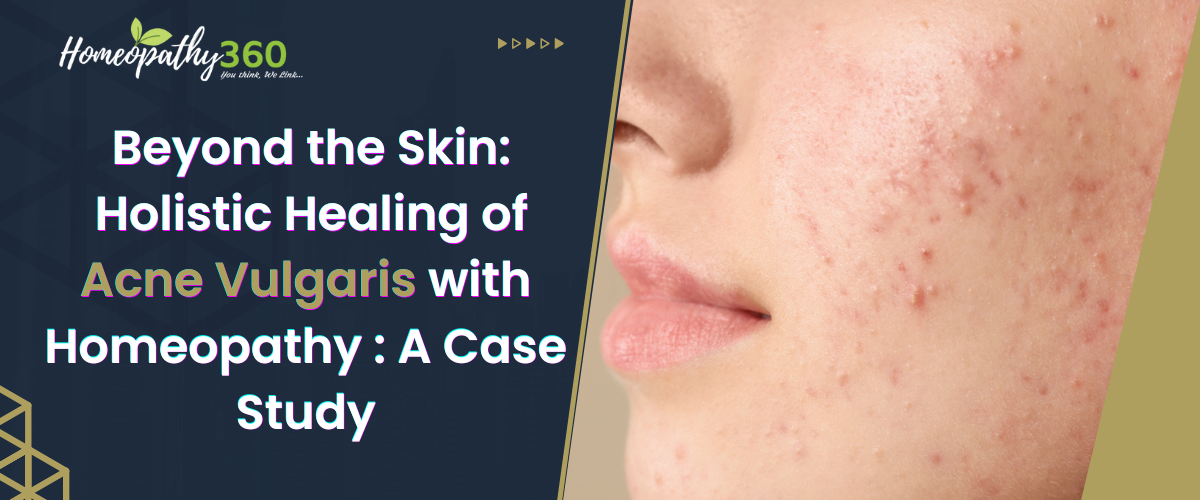
- Acne on face, mainly forehead, cheeks, and chin – since 2 years
- Pustular and nodular eruptions with occasional bleeding when scratched
- Blackheads and whiteheads
- Painful and itchy eruptions, especially before exams and during summer
- Scarring and pigmentation post healing
History of Present Illness:
The patient reports developing acne around the age of 17, which has gradually worsened. He notes a flare-up during exam stress, hot weather, and after eating oily or spicy foods. He has tried over-the-counter creams and antibiotics with only temporary relief. No history of hormonal treatment or systemic illness.
Past History:
- No history of TB, diabetes, hypertension, or major illness
Family History:
- Father – Diabetic
- Mother – History of acne during adolescence
- Elder sister – Clear skin
Personal History:
- Diet: Mixed
- Appetite: Good
- Thirst: Increased; prefers cold water
- Cravings: Sweets, fried food, eggs
- Aversion: Milk
- Bowel Movements: Regular
- Urine: Normal
- Perspiration: Profuse on face and scalp
- Sleep: Disturbed; due to late-night phone use and overthinking
- Dreams: Of exams and being judged by people
- Thermal Reaction: Hot patient; cannot tolerate heat
Mental Generals:
- Sensitive to criticism
- Competitive and perfectionist
- Gets irritated easily
- Feels low self-confidence due to facial appearance
- Anxious before exams
- Shy in social gatherings; avoids eye contact due to pimples
Physical Generals:
- Build: Medium
- Height: 5’8”
- Weight: 62 kg
- Complexion: Fair
- Appearance: Face covered with red pustular eruptions and post-acne marks
- Hair: Oily scalp, dandruff present
Modalities:
- Aggravation: Heat, sun exposure, oily food, exam stress, night
- Amelioration: Cold applications, bathing in cool water, winters
Diagnosis:
Acne Vulgaris, pustular and nodular type, aggravated by stress and diet.
Homeopathic Diagnosis:
Constitutional affection with underlying sycotic-miasmatic background. Individualistic features suggestive of a Silicea constitution.
Repertorization :
Using Kent Repertory
- Face – Acne – Pustular
- Skin – Eruptions – Suppurating
- Mind – Sensitive to criticism
- Skin – Scars – Tendency to formation of
- Generals – Heat – Intolerance of
Remedy Selected:
Silicea 200C, single dose, followed by placebo for 15 days.
Justification:
Silicea covers the mental state (sensitive, shy, low self-confidence), physical generals (chilly, sweet craving, oily skin), and tendency for pustular, slow-healing eruptions with scarring.
Follow-ups:
First Follow-Up (15 days):
- Slight reduction in inflammation
- Old eruptions healing slowly
- New eruptions still coming up, but less painful
- Sleep slightly improved
Plan: Wait and watch. Continue placebo.
Second Follow-Up (1 month):
- Noticeable reduction in pustules
- No new eruptions
- Scars slowly fading
- Mental state improved; more confident
Plan: Placebo continued. No repetition of dose
Third Follow-Up (2 months):
- Face 70% clear
- No active pustules
- Skin tone improved
- Patient reports improved social confidence
Plan: Placebo continued. Nutritional advice and hygiene maintained.
Results:
Following treatment with Silicea 200C, the patient showed significant clinical improvement. At the first follow-up (15 days post-treatment), there was a slight reduction in inflammation and old eruptions began to heal. New eruptions appeared, but were less painful. At the second follow-up (1 month), noticeable improvement was observed with fewer pustules and no new eruptions. Scarring was also beginning to fade, and the patient reported a positive change in his mental state, with increased confidence. By the third follow-up (2 months), the patient’s face was approximately 70% clearer, with no active pustules and improved skin tone. The patient’s social confidence had also improved.
Discussion:
Acne vulgaris is often linked with psychological distress, including low self-esteem and social anxiety, especially in young adults. The patient’s mental and emotional symptoms, including sensitivity to criticism and stress-induced flare-ups, were crucial factors in selecting the homeopathic remedy Silicea. This remedy, which addresses the mental and physical aspects of the condition, provided significant relief, both for the skin lesions and the patient’s psychological well-being. The gradual improvement observed in this case suggests that homeopathy, particularly constitutional treatment, can be an effective alternative or adjunct to conventional therapies for chronic conditions like acne vulgaris.
Acknowledgements:
We would like to express our gratitude to the patient, Mr. A.K., for his cooperation and active participation in the treatment process. We also acknowledge the guidance provided by the homeopathic repertories and the literature reviewed for this case.
References
| 1. | Allen Hc. Allen’s Keynotes Rearranged And Classified With Leading Remedies Of The Materia Medica And Bowel Nosodes Including Repertorial Index. 10th Ed. Rai Da, Editor.: B. Jain Publishers (P) Ltd; 2005. |
| 2. | Boericke W. Pocket Manual Of Homoeopathic Materia Medica & Repertory Comprising of The Characteristic And Guiding Symptoms Of All Remedies ( Clinical And Pathogenetic) Including Indian Drugs Usa- Europe-India: B. Jain Publishers Pvt. Ltd; 2018. |
| 3. | Loscalzo J, Kasper , Longo Dl, Fauci As, Hauser Sl, Jameson Jl. Harrison’s Principles Of Internal Medicine, 21st Edition: Mcgraw-Hill Education/ Medical; 2022. |
Disclaimer:
This case report is a single patient experience and should not be generalized to all individuals with acne vulgaris. Homeopathic treatment is highly individualized, and outcomes may vary. Patients should consult with qualified healthcare providers before starting or altering any treatment regimen. The treatment and remedies discussed in this report reflect the homeopathic approach and are not meant to replace conventional dermatological care.