

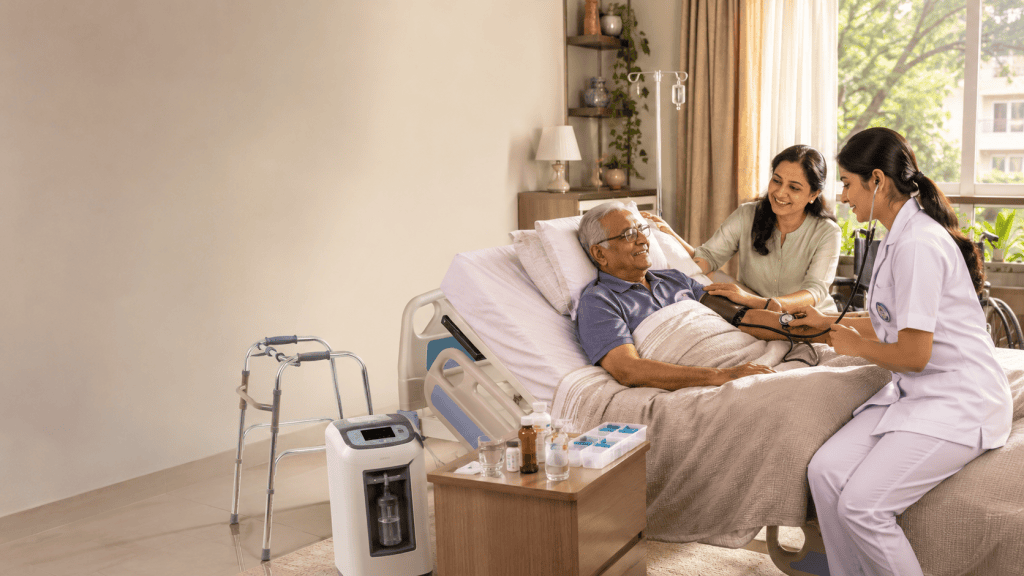
Here’s something most patients only realize after they’ve lived through it: getting discharged from the hospital doesn’t mean the body has finished healing — it just means the hospital’s part of the job is done. The real recovery, the slow and often unglamorous work of the body actually repairing itself, begins the moment a patient walks back through their own front door. Families usually feel a wave of relief on discharge day, and that’s natural. But recovery is a process, not a switch that flips the moment you leave the hospital bed. Treatment resolves the immediate crisis; what happens in the weeks after is what decides whether that resolution actually holds.
This is also a phase where many patients and families start looking beyond conventional treatment alone, exploring gentler, supportive approaches — including homeopathy — to help the body regain its natural balance during recovery. Homeopathy has long been valued for its focus on treating the person as a whole rather than just the isolated ailment, which fits naturally with the idea that post-discharge recovery is about the whole system healing, not just the original problem being “fixed.”
Why the Post-Hospitalization Phase Is Often Overlooked
Most attention in healthcare goes toward diagnosis, surgery, and the treatment plan itself. Discharge planning is often little more than a footnote. Once a patient is home, the sense of urgency fades quickly, and with it, the discipline around recovery. Medication timings slip. Follow-up appointments get pushed to “next week.” Wound dressings sit a day too long. None of this feels dangerous in the moment, but this exact gap — the space between hospital-level care and home-level care — is where a lot of otherwise preventable complications quietly take root.
Interestingly, this is also where a well-informed, integrative approach can help. Many practitioners now recognise that supportive constitutional remedies, alongside conventional post-operative care, can play a role in strengthening the body’s own recuperative capacity, easing anxiety around recovery, and supporting general well-being during a vulnerable phase — always alongside, never instead of, the treating doctor’s guidance.
What Proper Post-Hospitalization Care Involves
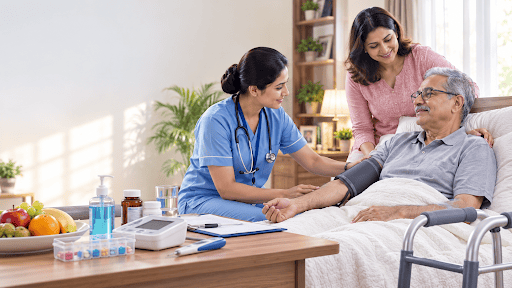
Good recovery at home is more than rest and home remedies. It typically involves structured medication management, correct wound care after surgery, mobility support so patients don’t overexert too soon, and regular monitoring of vitals — the unglamorous, repetitive work that quietly prevents bigger problems later. It also means paying attention to nutrition and, just as importantly, the emotional side of healing, since recovery affects mood as much as it affects the body.
This is exactly the space where structured Nursing Care at Home earns its place alongside any holistic or complementary approach a patient may be following. Trained nurses bring clinical precision to tasks families often end up guessing their way through — changing a dressing correctly, tracking a fever pattern, or noticing early signs of infection before it becomes serious — while still leaving room for the patient’s chosen course of complementary care, homeopathic or otherwise, to continue under professional guidance.
The Risks of Inadequate Post-Discharge Care
Skip this phase, or treat it casually, and the risks stack up quickly: infections, delayed wound healing, missed complications that a trained eye would have caught early. And then there’s the outcome nobody wants — hospital readmission, which is costly both financially and emotionally. Readmission prevention isn’t just a hospital statistic; it’s a real measure of whether home recovery was actually managed with care, or simply hoped for.
How Professional Home Healthcare Bridges the Gap
Families are rarely medically trained, and expecting them to replicate hospital-level supervision at home, unsupported, isn’t realistic. That’s the gap professional Home Healthcare Services are built to close — trained nursing staff, the right medical equipment on hand, and direct coordination with the treating doctor, all extended into the patient’s own home instead of a hospital ward. For elderly patients, post-surgical cases, or anyone managing a chronic condition, this kind of at-home medical supervision often makes the difference between a smooth rehabilitation and a rocky one that ends with another ER visit.
For patients who also lean on homeopathic remedies as part of their broader wellness routine, this combined approach — trained clinical support at home working in coordination with the treating physician, alongside any complementary care the patient values — tends to offer the most balanced path back to full health. It doesn’t replace either approach; it simply ensures nothing falls through the cracks during a genuinely vulnerable period.
Recovery Is a Continuum, Not an Endpoint
Treatment gets a patient out of the hospital. What happens after gets them back to their life. The hospital-to-home transition deserves as much planning and seriousness as the treatment itself — not an afterthought squeezed in between discharge paperwork and the car ride home. Whether a patient’s recovery journey includes homeopathic support, conventional home nursing, or both working together, the underlying principle stays the same: plan the recovery phase before it starts, not after something goes wrong. Real healing happens long after the hospital lights go out — and it happens best when it’s supported, not left to chance.


