Abstract
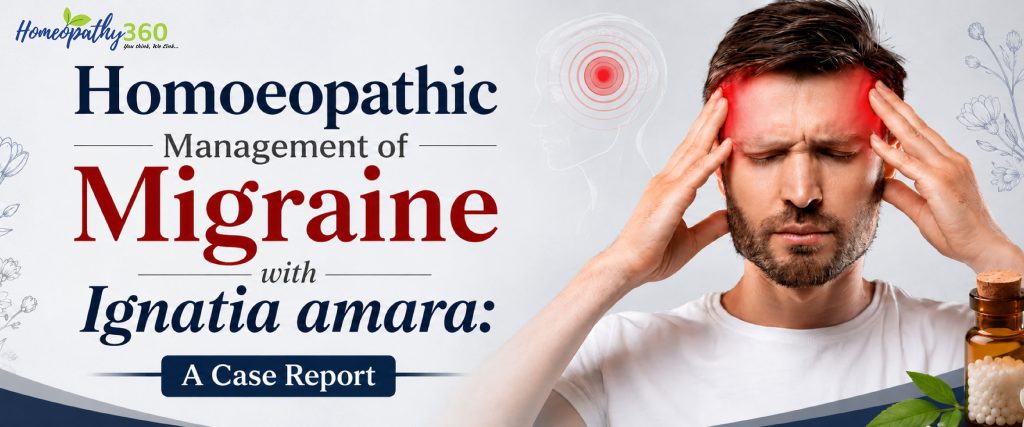
Migraine is a common neurological disorder that significantly affects the quality of life of affected individuals. This case report describes the homoeopathic management of a 34-year old male presenting with recurrent right-sided migraine precipitated by grief and emotional stress. After detailed case taking, individualization, and repertorization, Ignatia amara 200C was prescribed as the constitutional remedy. During follow-up, the patient showed marked improvement in the frequency, intensity, and duration of migraine attacks, along with improvement in associated symptoms and emotional well-being.
Keywords: Migraine, Homoeopathy, Ignatia amara, Individualization, Grief, Case Report
Introduction
Migraine is a benign, recurrent neurological disorder characterized by episodic attacks of headache associated with nausea, vomiting, photophobia, phonophobia, visual disturbances, vertigo, and light-headedness. The headache is typically unilateral and pulsating in nature. The episodic pattern of headache is its most characteristic feature.
Migraine affects approximately 15% of women and 6% of men. Approximately half of all migraine sufferers have a positive family history, suggesting a genetic predisposition. Various precipitating factors such as emotional stress, grief, hormonal changes, chocolate, cheese, alcohol, bright light, loud noise, and sleep disturbances may trigger attacks. Conventional treatment often provides symptomatic relief; however, recurrence remains common.
Homoeopathy emphasizes individualized treatment based on the totality of symptoms. The present case demonstrates the homoeopathic management of migraine using Ignatia amara, selected on the basis of characteristic mental and physical symptoms.
PHASE OF MIGRAINE
1. Prodrome: The first phase begins up to 24 hours before you experience a headache.
2. Aura: An aura is a group of sensory, motor and/or speech symptoms that act as a warning sign of a migraine headache. The aura phase can last as long as 60 minutes or as little as five. You might experience both the aura and the headache at the same time.
3. Headache: A migraine headache lasts between four hours to 72 hours.
4. Postdrome: The postdrome stage usually lasts for a few hours up to 48 hours. Symptoms feel similar to an alcohol-induced hangover, which is why the postdrome phase is known as a migraine hangover.
It can take about eight to 72 hours to go through the four stages.
Case History
Patient Information
• Name : xyz
• Age: 34 years
• Sex: Male
• Marital Status: Unmarried
Chief Complaint
Recurrent right-sided headache since 2016.
History of Present Illness
A 34-year-old unmarried male presented with recurrent attacks of right-sided headache involving the forehead and temporal region since 2016. The pain was pulsating and throbbing in nature, lasting approximately 3–4 hours and occurring 3–4 times per month.
The headache was associated with nausea, occasional vomiting, and marked photophobia. During attacks, the patient preferred to lie quietly in a dark room and experienced relief from firm pressure over the affected side.
The attacks were aggravated by emotional stress, grief, suppressed anger, loud noise, and bright light. The complaints first developed following prolonged emotional distress after a significant personal disappointment. Since then, the patient had developed a tendency to suppress emotions and brood silently over emotional pain.
During the previous year, the frequency and severity of migraine attacks gradually increased. He had been taking conventional analgesics during acute attacks with only temporary relief. Due to increasing frequency and interference with daily activities, he sought homoeopathic treatment.
Past History
• Appendicitis (2008); treated surgically.
Family History
• Mother: Healthy
• Father: Left-sided paralysis since 2012
Personal History
Mental Generals
• Emotional and sensitive.
• Ailments from grief.
• Easily hurt by rejection.
• Broods silently over emotional disappointments.
• Suppresses emotions.
• Aversion to consolation.
• Desires solitude during suffering.
• Sensitive to light and noise.
Physical Generals
Parameter Findings
Diet Non-vegetarian
Appetite Diminished
Desire Spicy food
Aversion Fatty food
Thirst Decreased (≈1 L/day)
Tongue White, dry
Salivation Decreased
Perspiration Mainly on face
Stool Constipation with unsatisfactory evacuation Urine Normal
Bathing Regular with normal water
Sleep Covers whole body during sleep Dreams Frightful
Thermal Reaction Chilly
Skin Oily
Habits
• Alcohol: Daily consumption
• Tea/Coffee: 4–5 cups daily
General Examination
Parameter Findings
Height 5 ft 10 in
Weight 50 kg
Build Lean, thin, tall
Temperature Afebrile
Pulse 72/min, regular
Blood Pressure 110/70 mmHg
Respiratory Rate 16/min
Pallor Absent
Icterus Absent
Clubbing Absent
Hair Black; hair fall present Gums Healthy
Breath No foul odour
Teeth Lightly yellow and unhealthy
Clinical Diagnosis
Migraine
Differential Diagnosis
• Tension-type headache
• Cluster headache
• Sinus headache
• Hypertensive headache
Miasmatic Diagnosis
Predominantly Psora
Psoric Features
• Right-sided recurrent headache
• Headache from emotional disturbance
• Headache aggravated by mental exertion
• Hypersensitivity to light and noise
• Ailments from grief
• Facial perspiration
Case Analysis
Mental Generals
• Ailments from grief
• Suppressed emotions
• Silent brooding
• Aversion to consolation
• Frequent sighing
• Sensitive disposition
• Desire for solitude
Physical Generals
• Chilly patient
• Thirst diminished
• Desire for spicy food
• Aversion to fatty food
• Constipation
• Frightful dreams
Particular Symptoms
• Right-sided pulsating migraine
• Nausea with occasional vomiting • Photophobia
• Better from pressure
• Better by lying quietly in a dark room
• Worse from emotional stress, grief, loud noise, and bright light
Prescribing Totality
• Ailments from grief
• Suppressed emotions
• Silent brooding
• Aversion to consolation
• Frequent sighing
• Right-sided pulsating headache
• Sensitive to light and noise
• Chilly constitution
• Thirst diminished
Rubrics
1. Mind – Ailments from grief
2. Mind – Brooding
3. Mind – Consolation – aggravates
4. Mind – Sighing
5. Head – Pain – pulsating pain
6. Head – Pain – sides-right
7. Dreams – Frightful
8. Generals-Cold – aggravates
Repertorial Totality
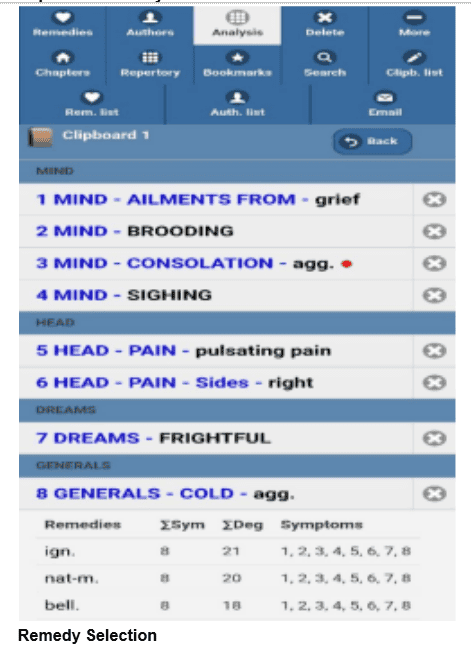
Ignatia amara 200C
Justification for Remedy Selection
Ignatia amara was selected because it closely corresponded to the patient’s characteristic mental and physical symptoms.
• Ailments from grief and emotional disappointment
• Suppressed emotions with silent brooding
• Aversion to consolation
• Frequent sighing
• Hypersensitivity to light and noise
• Right-sided pulsating headache precipitated by emotional stress • Relief from pressure and lying in a dark, quiet room
These keynote features strongly indicated Ignatia amara as the constitutional remedy. Prescription
• Ignatia amara 200C – One dose
• Placebo for 15 days
General Advice
• Maintain adequate hydration.
• Eat meals at regular intervals.
• Ensure adequate sleep.
• Practise stress management.
• Avoid known migraine trigger factors.
Follow-up
First Follow-up (15 Days)
• Headache intensity reduced by approximately 50%.
• No vomiting.
• Emotional state improved.
• Placebo continued.
Second Follow-up (1 Month)
• Only one mild migraine attack.
• Duration reduced to approximately 2 hours.
• Sleep improved.
• Placebo continued.
Third Follow-up (2 Months)
• No migraine attacks.
• Emotional stability improved.
• General well-being markedly improved.
General Management
• Avoid identified trigger factors.
• Maintain a regular sleep schedule.
• Ensure adequate hydration.
• Eat meals at regular intervals.
• Limit caffeine and alcohol intake.
• Practise yoga, meditation, and breathing exercises.
• Avoid prolonged exposure to loud noise.
• Wear sunglasses in bright sunlight.
• Engage in regular moderate physical activity.
Conclusion
This case report describes the homoeopathic management of a 34-year-old male with migraine without aura, in whom Ignatia amara was selected based on individualization and the totality of characteristic symptoms. During follow-up, the patient experienced a progressive reduction in the frequency, intensity, and duration of migraine attacks, along with improvement in associated symptoms and emotional well-being.
Although the clinical outcome was favourable, a single case report cannot establish the efficacy of the remedy. Further well-designed observational studies and controlled clinical trials are required to evaluate the role of individualized homoeopathic treatment in migraine. Nevertheless, this case highlights the importance of detailed case taking and individualized remedy selection in homoeopathic practice.
Guided by :
Dr. S .C. Awasthi (Prof) – Department of organon of medicine and homoeopathic philosophy Govt . HOMOEOPATHIC medical College and hospital Bhopal(M.P.)
Dr Babita Shrivastava (HOD) – Department of organon of medicine and homoeopathic philosophy. Govt . HOMOEOPATHIC medical College and hospital Bhopal(M.P.)