Homeopathy As An Adjunct In The Healing of Lateral Condyle Fracture: A Case Study
Abstract
Background: Lateral condyle fractures of the humerus are common elbow injuries that require prompt orthopedic management to achieve satisfactory bone union and functional recovery. Homoeopathy is sometimes used as an adjunctive treatment to support symptom relief and recovery alongside conventional care.
Case Presentation: A 59-year-old male presented with pain, swelling, and restricted movement of the left elbow following a fall on an outstretched hand. Radiographic examination confirmed a fracture of the lateral condyle of the left humerus. Although open reduction and internal fixation was advised, the patient declined surgery and opted for conservative orthopedic management with plaster immobilization. Individualized homoeopathic treatment was prescribed based on the patient’s constitutional characteristics and symptom totality, with Calcarea silicata selected as the indicated remedy. The patient remained under regular orthopedic supervision with serial radiographic evaluation.
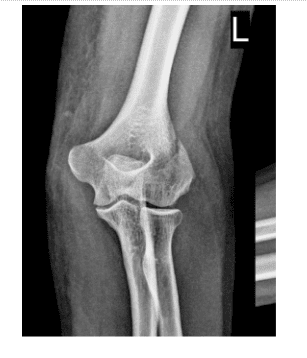
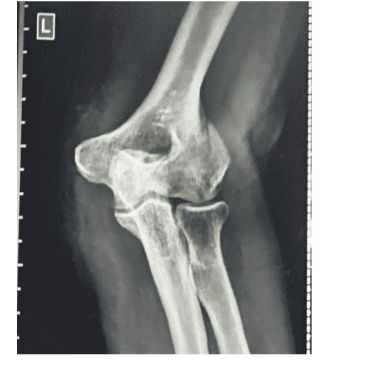
Outcome: Progressive reduction in pain and improvement in sleep and overall well-being were noted during follow-up. Serial radiographs demonstrated satisfactory fracture healing, with approximately 40–50% callus formation on the first follow-up and near-complete union with only a residual hairline fracture at the subsequent evaluation. After cast removal, physiotherapy was initiated to restore elbow mobility and muscle strength.
Conclusion: This case demonstrates satisfactory clinical and radiological recovery in a patient with a lateral condyle fracture managed conservatively under orthopedic supervision with individualized homoeopathy used as an adjunctive therapy. While this case suggests that adjunctive homoeopathic treatment may contribute to patient comfort and recovery, it cannot establish efficacy. Further well-designed controlled clinical studies are required to evaluate the role of homoeopathy in fracture management.
Keywords: Lateral condyle fracture, Humerus fracture, Homoeopathy, Calcarea silicata, Adjunctive therapy, Case report, Conservative fracture management, Individualized treatment, Orthopedic rehabilitation.
Fracture
A fracture is defined as a break in the continuity of a bone, with or without displacement of the fractured fragments.
Fractures are classified in several ways:
1. According to skin involvement
– Closed (Simple) fracture: The skin remains intact, and there is no communication between the fracture site and the external environment.
– Open (Compound) fracture: The fractured bone communicates with the external environment through a wound, increasing the risk of infection.
2. According to completeness
– Complete fracture: The bone is broken completely into two or more fragments.
– Incomplete fracture: The break does not extend through the entire thickness of the bone, as seen in greenstick or buckle fractures, commonly occurring in children.
3. According to fracture pattern
– Transverse fracture: The fracture line is perpendicular to the long axis of the bone.
– Oblique fracture: The fracture line runs diagonally across the bone.
– Spiral fracture: Produced by twisting forces, resulting in a helical fracture line.
– Comminuted fracture: The bone is broken into three or more fragments.
– Impacted fracture: One fragment is driven into another.
– Avulsion fracture: A fragment of bone is pulled away by the forceful contraction of a tendon or ligament.
4. According to etiology
– Traumatic fractures: Caused by external force or injury.
– Pathological fractures: Occur in bones weakened by disease.
– Stress fractures: Result from repetitive mechanical loading over time.
Early diagnosis, proper reduction, stable fixation when indicated, and appropriate rehabilitation are essential to achieve satisfactory bone healing and restoration of function.
ROLE OF HOMOEOPATHY IN THE MANAGEMENT OF FRACTURES
Fractures are primarily managed through established orthopedic principles, including reduction, immobilization or surgical fixation when indicated, pain management, and rehabilitation. These interventions remain the standard of care and are essential for achieving proper bone union and restoration of function. Homoeopathy may be used as a complementary therapeutic approach alongside conventional orthopedic treatment, with remedies selected according to the principle of individualization.
In homoeopathic practice, the selection of a remedy is based on the totality of the patient’s symptoms, including the nature of pain, modalities, mental and emotional state, and individual constitutional characteristics. Several homoeopathic medicines have traditionally been used in the management of fractures and associated soft tissue injuries.
Arnica montana is commonly prescribed immediately after trauma to relieve soreness, bruising, and the effects of shock.
Symphytum officinale, often referred to as “knit-bone” in homoeopathic literature, has traditionally been used to support the healing of fractures after proper reduction and immobilization and to alleviate persistent pain at the fracture site.
Calcarea phosphorica is frequently considered during the reparative phase of bone healing, particularly in cases of delayed union or in growing children.
Ruta graveolens is indicated for injuries involving the periosteum, ligaments, and tendons, while Hypericum perforatum may be useful when there is nerve-rich tissue injury associated with severe shooting pain.
Homoeopathic treatment aims to promote the body’s self-regulatory mechanisms, reduce pain and inflammation, improve patient comfort, and support recovery. However, homoeopathy should be regarded as an adjunct to, and not a replacement for, appropriate orthopedic management. Patients with fractures require prompt diagnosis, radiological evaluation, and stabilization according to standard orthopedic guidelines. Any observed clinical improvement should be interpreted in the context of concurrent conventional treatment and appropriate follow-up.
Although case reports and observational studies have described favorable outcomes with adjunctive homoeopathic treatment in fracture healing, high-quality randomized controlled trials remain limited. Therefore, further well-designed clinical studies are needed to establish the efficacy and role of homoeopathy in fracture management using evidence-based methodologies.
Case Report
A 59-year-old male patient presented to the o.p.d with pain, swelling and restricted movements of the left elbow following a fall on an outstretched hand while walking on a wet surface. The injury had occurred few hours prior to consultation. Radiographic examination confirmed a fracture of the lateral condyle of the left humerus. The patient had already been evaluated by an orthopedic surgeon, and the affected limb was immobilized with an above-elbow plaster slab. The patient was advised an OPEN REDUCTION AND INTERNAL FIXATION surgery by the orthopedic surgeon, but he refused to undergo surgery and opted for plaster and he sought homoeopathic treatment as an adjunct to conventional orthopedic management for pain relief and recovery.
History Of Presenting Illness
The pain was severe, dull aching with intermittent stitching sensations, aggravated by the slightest movement or touch and ameliorated by complete rest and support of the limb. Swelling was present around the elbow joint with marked tenderness. The patient complained of weakness and a feeling that healing was slow.
Past History – No history of diabetes mellitus, hypertension, or tuberculosis. No previous Fractures Or Major Surgeries.
Family History – His father had a fall in 2005 and had to undergo surgery for fracture in the femur after which his condition had deteriorated and later, he died.
Personal History
– Appetite: Moderate
– Thirst: scanty; desires cold water.
– Likes : milk.
– Perspiration: Profuse, especially on the scalp and neck.
– Sleep: Disturbed due to pain.
– Bowel and bladder habits: Regular.
– Thermal reaction: Chilly.
Mental Generals
The patient was gentle, conscientious, and responsible and had a weeping disposition. He was anxious about his recovery and repeatedly expressed concern that the fracture might not unite properly. He lacked self-confidence regarding his health, became easily discouraged, and desired reassurance from family members and the physician. The patient showed marked fear for surgery due to past occurrence in the family.
Clinical Examination
– Swelling and tenderness over the lateral aspect of the left elbow.
– Painful restriction of flexion and extension.
– No neurovascular deficit noted distally.
Investigations
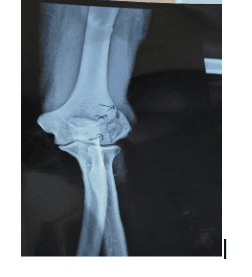
X-ray Left Elbow (AP and Lateral Views): Fracture of the lateral condyle of the left humerus with no gross displacement.
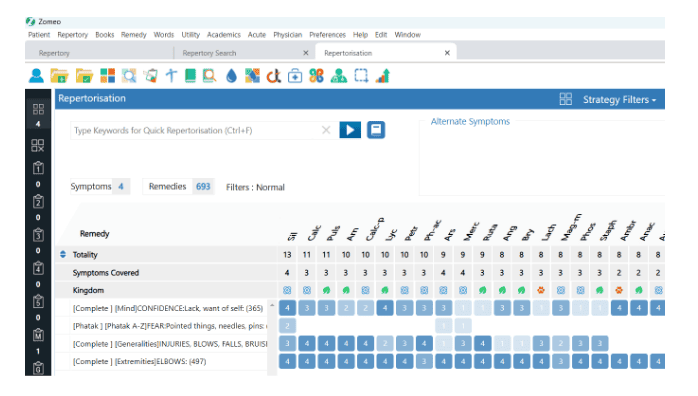
Totality Of Symptoms
1 Lack of self confidence
2 Fearful – fear of surgeries
3 Chilly Patient
4 Fracture Of Elbow
Repertorial Sheet (Zomeo Computer Repertory)
Prescription
30/4/26
Rx
Calcarea Silicata 200 single dose
Sac lac 30 B.D. x 15 days
Auxilliary Mode Of Treatment
– The patient was advised to continue treatment under the supervision of an orthopedic surgeon.
– The patient was instructed to avoid lifting weights and unnecessary movements of the affected limb until radiological evidence of union was obtained.
– The affected limb was kept elevated to minimize pain and swelling.
– A nutritious diet rich in protein, calcium, vitamin D, and vitamin C was advised to support bone healing.
– Adequate hydration and sufficient rest were recommended.
– Periodic clinical and radiological follow-up was advised to assess fracture union.
– After satisfactory fracture healing, gradual range-of-motion exercises and physiotherapy were recommended to restore elbow mobility and muscle strength.
– The patient was advised to report immediately if there was increasing pain, swelling, numbness, discoloration of the fingers, or any loosening or damage to the plaster.
Follow Up
16/5/26
General sense of well being – good, pain was reduced, sleep had improved
X-Ray was repeated by the patient showing 40-50% improvement.
Rx
Calcarea Silicata 200 single dose
Sl 30 B.D. x 21 days
Patient was advised to continue his calcium and Vit D3 supplements as suggested by the orthopedic surgeon. And was asked to repeat the x ray for next follow up.
13/6/26
Patient complaint of stiffness in left shoulder and fingers.
No other complaints.
X ray showed marked improvement- now only a minor hairline crack was seen for which no cast was required.
Patient was advised physiotherapy to restore elbow mobility and muscle strength.
Rx
Sac Lac 200 b.d. x 15 days
The patient was counseled before plaster removal that mild to moderate swelling of the affected limb is a common and expected finding following cast removal due to temporary stiffness, disuse, and soft tissue edema. He was reassured that the swelling would gradually subside with limb elevation, prescribed physiotherapy, and gradual mobilization.
Discussion
The patient received standard orthopedic care, including immobilization and follow-up imaging. Homoeopathic treatment with Calcarea silicata was prescribed on the basis of the individualized constitutional picture rather than the fracture diagnosis alone. Clinical improvement occurred during the expected course of fracture healing while the patient remained under orthopedic supervision.
Conclusion
Lateral condyle fractures require timely diagnosis and appropriate orthopedic management to ensure satisfactory healing and restoration of function. In the present case, conservative orthopedic treatment with plaster immobilization was complemented by individualized homoeopathic management based on the totality of symptoms. The patient experienced progressive symptomatic improvement, and serial radiographs demonstrated satisfactory fracture union during the expected healing period under continued orthopedic supervision. Although this case illustrates a favorable clinical outcome, it represents the experience of a single patient and does not establish a causal effect of homoeopathic treatment. Further prospective studies and randomized controlled trials are necessary to determine the potential adjunctive role of individualized homoeopathy in fracture healing and functional recovery.
References
- Organon of Medicine. Samuel Hahnemann. 6th ed. New Delhi: B. Jain Publishers.
- Materia Medica Pura. Samuel Hahnemann.
- Pocket Manual of Homoeopathic Materia Medica. William Boericke. New Delhi: B. Jain Publishers.
- Lectures on Homoeopathic Materia Medica. James Tyler Kent. New Delhi: B. Jain Publishers.
- Solomon L, Warwick D, Nayagam S. Apley’s System of Orthopaedics and Fractures. 10th ed. CRC Press; 2018.
- S. Terry Canale, James H. Beaty, editors. Campbell’s Operative Orthopaedics. 14th ed. Philadelphia: Elsevier; 2021.
- S. M. Turek. Turek’s Orthopaedics: Principles and Their Application. 7th ed. Philadelphia: Lippincott Williams & Wilkins; 2005.
UNDER THE GUIDANCE OF
Dr Rakesh Sonkusare, Associate Professor
Department of Organon Of Medicine And Homeopathic Philosophy
Government Homeopathic Medical College, Bhopal. (M.P.)