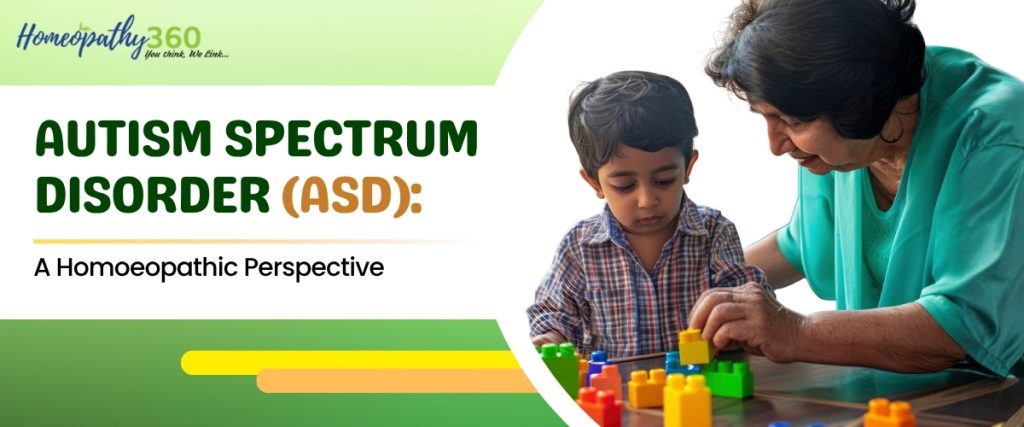
Autism Spectrum Disorder (ASD): A Homoeopathic Perspective
Abstract
Autism Spectrum Disorder (ASD) is a multifactorial neurodevelopmental disorder characterized by persistent deficits in social communication, impaired social interaction, restricted interests, repetitive behaviors, and sensory processing abnormalities. The prevalence of ASD has increased significantly over recent decades, making it an important public health concern. Although the exact etiology remains uncertain, current evidence suggests the involvement of genetic, neurobiological, environmental, immunological, and epigenetic factors. Early diagnosis and comprehensive intervention are essential for improving developmental outcomes. Homoeopathy adopts an individualized and holistic approach, emphasizing the unique symptomatology of each child. Constitutional prescribing, combined with educational and behavioral interventions, may contribute to overall well-being and functional development. This article reviews the etiology, clinical presentation, diagnosis, complications, and homoeopathic management of Autism Spectrum Disorder.
Keywords
Autism Spectrum Disorder, Neurodevelopmental Disorder, Social Communication, Repetitive Behavior, Sensory Dysfunction, Constitutional Homoeopathy, Child Development, Individualization.
Introduction
Autism Spectrum Disorder (ASD) is one of the most prevalent neurodevelopmental disorders affecting children worldwide. It is characterized by impairments in social communication and interaction accompanied by restricted, repetitive patterns of behaviour and interests. The term “spectrum” reflects the wide variability in symptom severity and functional impairment among affected individuals.
The disorder typically manifests during early childhood and continues throughout life. Children with ASD may exhibit difficulties in verbal and non-verbal communication, social reciprocity, emotional regulation, and adaptive functioning. Increasing awareness, improved screening methods, and expanded diagnostic criteria have contributed to the rising prevalence of ASD across the globe.
Homoeopathy recognizes the individuality of each patient and seeks to understand the totality of symptoms rather than focusing solely on the disease label. The homoeopathic approach aims to support overall development and enhance the quality of life of affected children
Definition
Autism Spectrum Disorder is a neurodevelopmental condition characterized by persistent deficits in social communication and social interaction across multiple contexts, together with restricted and repetitive patterns of behaviour, interests, or activities, resulting in clinically significant impairment in personal, social, educational, or occupational functioning.
Epidemiology
- ASD occurs worldwide irrespective of ethnicity, culture, or socioeconomic status.
- The disorder is more common in males than females.
- Symptoms generally appear before three years of age.
- Early diagnosis has increased due to improved awareness and screening programs.
- ASD represents one of the leading causes of developmental disability in childhood.
Etiopathogenesis
The exact pathogenesis of Autism Spectrum Disorder remains incompletely understood. Multiple factors appear to interact during critical periods of neurodevelopment.
Genetic Factors
Genetic susceptibility plays a major role in ASD. Numerous genes involved in neuronal development, synaptic transmission, and brain connectivity have been associated with autism.
Neurobiological Factors
Abnormal brain growth, altered neuronal connectivity, and disturbances in neurotransmitter systems have been observed in individuals with ASD.
Environmental Factors
Prenatal exposure to infections, maternal metabolic disorders, environmental toxins, and advanced parental age may increase the risk of developing ASD.
Immunological Factors
Emerging evidence suggests that immune dysregulation and neuroinflammatory processes may contribute to altered neurodevelopment.
Epigenetic Influences
Environmental factors may interact with genetic predisposition through epigenetic modifications, influencing gene expression during critical developmental periods.
Clinical Features
Social Interaction Deficits
- Reduced eye contact
- Limited facial expressions
- Difficulty forming peer relationships
- Impaired social reciprocity
Communication Difficulties
- Delayed speech development
- Echolalia
- Limited conversational skills
- Difficulty understanding non-verbal communication
Repetitive Behaviors
- Hand flapping
- Rocking movements
- Repetitive speech patterns
- Rigid adherence to routines
Sensory Abnormalities
- Hypersensitivity to sound, light, touch, or smell
- Reduced response to pain
- Unusual sensory-seeking behaviors
Behavioural Manifestations
- Irritability
- Hyperactivity
- Aggression
- Self-injurious behaviour
DSM-5 Diagnostic Criteria
Diagnosis requires:
A. Persistent deficits in social communication and social interaction.
B. Restricted, repetitive patterns of behaviour, interests, or activities.
C. Symptoms present during the early developmental period.
D. Clinically significant impairment in functioning.
E. Symptoms not better explained by intellectual disability alone
Investigations
Diagnosis is primarily clinical; investigations help exclude associated conditions.
Developmental Assessment
- Speech and language evaluation
- Cognitive assessment
- Adaptive functioning assessment
Screening Tools
- M-CHAT
- ADOS
CARS Medical Evaluation
- Hearing assessment
- Neurological examination
- Genetic testing when indicated
- Metabolic screening in selected cases
Ancillary Investigations
- EEG when seizures are suspected
- Brain imaging when clinically indicated
Differential Diagnosis
Attention Deficit Hyperactivity Disorder (ADHD)
Predominant hyperactivity and inattention without core social deficits.
Intellectual Disability
Global developmental delay without characteristic autistic features.
Language Disorders
Primary language impairment with relatively preserved social interaction.
Hearing Impairment
Communication difficulties secondary to hearing loss.
Social Anxiety Disorder
Avoidance due to anxiety rather than impaired social understanding.
Childhood-Onset Schizophrenia
Presence of hallucinations, delusions, and psychotic symptoms.
Complications
- Academic difficulties
- Social isolation
- Behavioural disturbances
- Anxiety disorders
- Depression
- Sleep disorders
- Epilepsy
Homoeopathic Management
Homoeopathic Philosophy
Homoeopathy emphasizes individualized treatment based on the totality of symptoms. Each child with ASD presents a unique constitutional picture requiring careful analysis.
Case Taking
Detailed evaluation includes:
- Prenatal history
- Birth history
- Developmental milestones
- Family history
- Behavioural characteristics
- Emotional responses
- Sleep patterns
- Food preferences
- Sensory sensitivities
Miasmatic Consideration
Psora
Developmental delay, anxiety, hypersensitivity.
Sycosis
Repetitive behaviour, rigidity, obsessive traits.
Syphilis
Aggression, self-injurious tendencies, severe developmental impairment.
Tubercular Miasm
Restlessness, impulsiveness, hyperactivity.
Commonly Indicated Remedies
Baryta Carbonica
Delayed development, shyness, social immaturity.
Calcarea Carbonica
Delayed milestones, anxiety, sluggish development.
Carcinosinum
Sensitive, perfectionistic, emotionally withdrawn children.
Stramonium
Fear, aggression, emotional instability.
Tuberculinum
Hyperactivity, destructiveness, restlessness.
Medorrhinum
Impulsiveness, emotional variability, excessive activity.
Hyoscyamus Niger
Attention-seeking behaviour, inappropriate conduct.
Tarentula Hispanica
Marked restlessness and hyperactivity.
Supportive Measures
- Speech therapy
- Occupational therapy
- Behavioural therapy
- Parent counselling
- Special education
- Social skills training
Prognosis
The prognosis depends upon severity of symptoms, cognitive functioning, language development, family support, and the timing of intervention. Early multidisciplinary management significantly improves long-term outcomes.
Conclusion
Autism Spectrum Disorder is a complex neurodevelopmental condition requiring comprehensive and individualized care. Homoeopathy offers a patient-centred approach that focuses on the totality of symptoms and constitutional characteristics of the child. Although supportive therapies remain essential components of management, individualized homoeopathic treatment may contribute to improved behavioural adaptation, emotional stability, and overall quality of life when integrated into a multidisciplinary treatment framework.
Reference
| 1. | Cooper R. Diagnosing the diagnostic and statistical manual of mental disorders: Fifth edition. London, England: Routledge; 2019. |
| 2. | Kliegman RM, Stanton B, Geme J, Schor NF, Behrman RE. Nelson textbook of pediatrics, 2-volume set. 20th ed. Philadelphia, PA: Elsevier – Health Sciences Division; 2015. |
| 3. | Harrison’s principles of internal medicine. New Delhi, India: Om Books International; 2025. |
| 4. | Boericke W. Pocket Manual of Homoeopathic Materia Medica. Rarebooksclub.com; 2012. |
5 World Health Organization (WHO): Autism Spectrum Disorders.
6 Kent JT. Lectures on Homoeopathic Philosophy.
7 Hahnemann S. Organon of Medicine.
8 Clarke JH. Dictionary of Practical Materia Medica.
9 National Institute of Mental Health (NIMH).
10 CDC Autism Spectrum Disorder Resources.