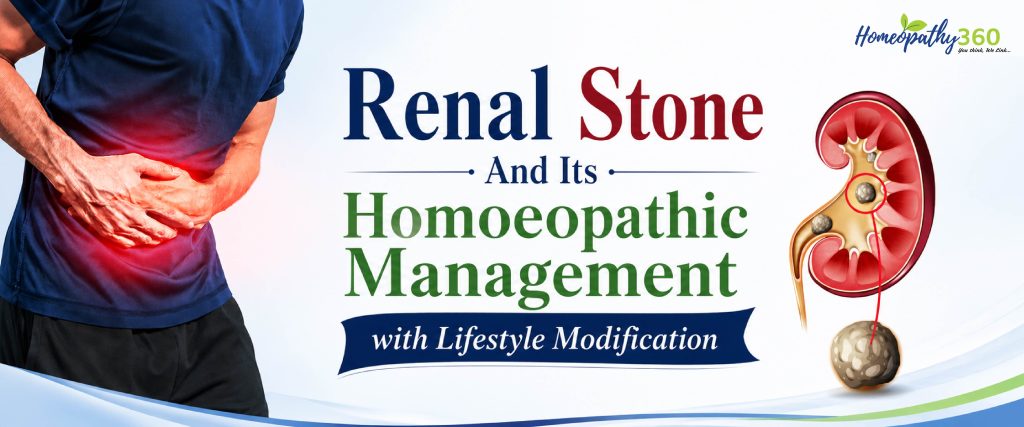
Abstract – Renal stone disease, also known as urolithiasis or nephrolithiasis, is a common disorder affecting the urinary tract worldwide. It is characterized by the formation of calculi within the kidneys due to supersaturation of urinary salts. Recurrence is frequent and significantly affects quality of life. Conventional management includes hydration, analgesics, lithotripsy, and surgery. Homoeopathy offers an individualized therapeutic approach aimed at relieving symptoms, preventing recurrence, and improving constitutional susceptibility. This article reviews the etiology, pathophysiology, clinical features, investigations, and homoeopathic therapeutics of renal stone disease..
Keywords: Renal stone disease; Urolithiasis; Nephrolithiasis; Homoeopathy; Renal calculi; Urinary stones; Constitutional treatment; Berberis vulgaris; Lycopodium; Renal colic.
Introduction: Renal stone disease refers to the formation of crystalline concretions in the kidneys or urinary tract. It is one of the most prevalent urological disorders, with increasing incidence due to dietary habits, sedentary lifestyle, obesity, and metabolic abnormalities.
India is considered part of the “stone belt,” particularly northern and central regions, where the prevalence of urinary calculi is high because of climatic conditions and dehydration.
Age and Sex: Men are affected more commonly than women, usually between 20–50 years of age. Recurrence occurs in nearly 50% of patients within 5–10 years.
Etiology: Renal stone disease is caused by multiple factors that promote crystal formation in urine.
- Low water intake and dehydration
- High salt and animal protein diet
- Excess intake of oxalate-rich foods
- Hypercalciuria and hyperuricemia
- Recurrent urinary tract infections
- Hot climate and sedentary lifestyle
- Family history and genetic predisposition.
These factors lead to supersaturation of urine and subsequent stone formation.
Pathophysiology- Renal stones develop due to supersaturation of urine with stone-forming substances such as calcium, oxalate, uric acid, and cystine.
The process involves:
- Supersaturation
- Crystal nucleation
- Crystal aggregation
- Crystal retention within renal tubules.
Common stone types include:
- Calcium oxalate stones
- Calcium phosphate stones
- Uric acid stones
- Struvite stones
- Cystine stones
Clinical Features:
Symptoms
- Severe colicky pain in loin radiating to groin
- Hematuria
- Burning micturition
- Nausea and vomiting
- Increased urinary frequency
- Restlessness during pain
Signs
- Renal angle tenderness
- Hematuria
- Fever in infected stones
Complications
- Hydronephrosis
- Recurrent urinary tract infection
- Pyonephrosis
- Renal failure
- Sepsis
Prognosis– usually excellent.
Investigations-
- Urine Examination
- Microscopic hematuria
- Crystals
- Pus cells
- Urine pH
- Blood Tests
- Serum calcium
- Serum uric acid
- Renal function tests
- Imaging
- Ultrasonography abdomen
- X-ray KUB
- NCCT KUB (gold standard)
Homoeopathic Management:
Berberis vulgaris :- It acts upon the urinary organs when there is a tendency to the formation of calculi and lithaemia. There are sharp, stitching pains radiating from the kidney to the bladder or thighs. Pain is worse from motion, standing, or jarring.Urine is dark yellow or red, becoming turbid with mucous sediment.
Lycopodium clavatum :- Right-sided renal calculi, red sandy sediment in urine, symptoms worse from 4-8 PM. Pain extends from right kidney to bladder.Flatulence associated with urinary complaints.
Cantharis :- Intense burning pain before, during, and after urination; frequent urging with scanty urine. Useful when calculus causes acute inflammation.
Sarsaparilla officinalis :-Severe pain at the close of urination; sandy sediment; patient must stand to pass urine. Especially useful for children.
Dioscorea villosa :- Intense colicky pain radiating downward; pain better by stretching backward, worse by bending forward.
Ocimum canum :- Renal colic with uric acid diathesis; severe cutting pain along ureters; urine passed drop by drop.
Hydrangea arborescens :- White deposits in urine; soreness in kidney region; useful for dissolution of stones.
Pareira brava :- Renal colic with scanty urine; pain relieved after urination; useful in chronic kidney weakness with calculi.
Uva ursi :- Severe pain during urination; urine contains blood, mucus,or pus; strong irritation of urinary tract.
Dietary and Lifestyle Advice :- Adequate water intake, balanced diet, reduction of salt and oxalate-rich foods, regular physical activity,maintain healthy body weight,avoidance of suppression of urinary symptoms.
Conclusion : Renal stone disease is a common recurrent urinary disorder with multifactorial etiology. Early diagnosis and preventive measures are important to reduce morbidity and recurrence. Homoeopathy offers a holistic and individualized approach which may aid symptomatic relief and constitutional improvement when combined with lifestyle and dietary modifications.
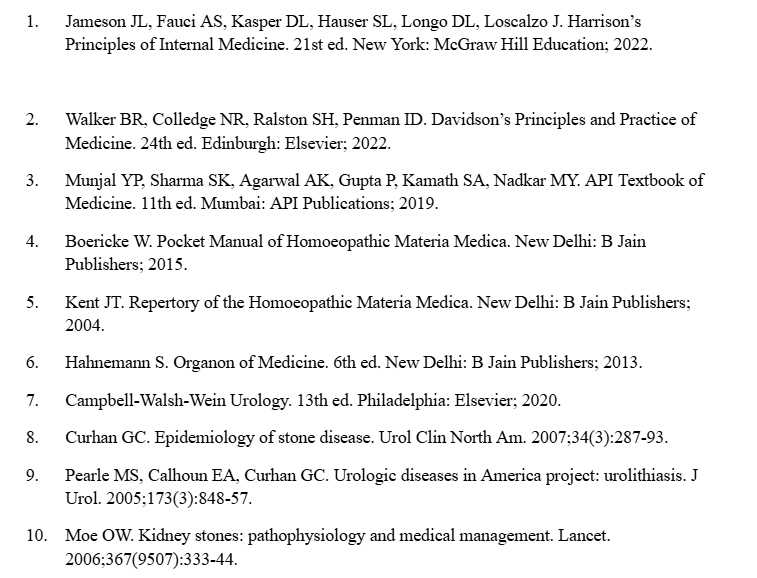
References:
GUIDED BY-
ASSOCIATE PROF. (DR.) RAJEEV SENGAR
M.D.(HOM.), DEPARTMENT OF PHYSIOLOGY, COLLEGE- GOVT.HOMOEOPATHIC MEDICAL COLLEGE AND HOSPITAL, BHOPAL, M.P., INDIA