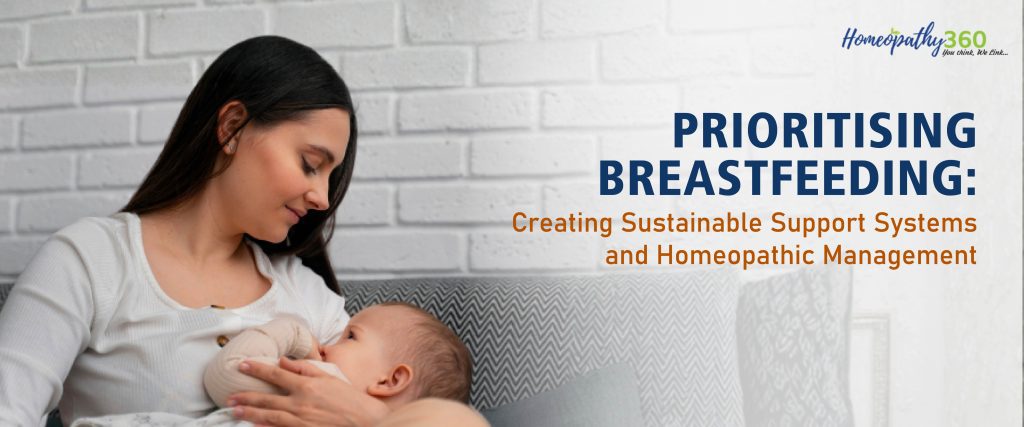
Prioritizing Breastfeeding: Creating Sustainable Support Systems and Homeopathic Management
Abstract
Breastfeeding is a natural, cost-effective, and life-saving practice that plays a crucial role in ensuring the health and survival of both infants and mothers. Despite its known benefits, various social, cultural, and medical challenges hinder its optimal practice. This article highlights the importance of breastfeeding, its benefits, best practices, common difficulties, and homoeopathic management of related problems, emphasizing the need for sustainable support systems.
Introduction
Breastfeeding is often described as “God’s gift to humankind” due to its unmatched nutritional and immunological value. It is the most natural way of providing ideal food for the healthy growth and development of infants.
The World Health Organization (WHO) recommends:
Early initiation within one hour of birth
Exclusive breastfeeding for the first 6 months
Continued breastfeeding up to 2 years or beyond
Breast milk is a unique biological fluid that cannot be artificially replicated. Its composition adapts to the needs of the growing infant, ensuring optimal nourishment and protection.
Composition and Stages of Breast Milk
- Breast milk contains a perfect balance of:
- Proteins
- Fats
- Carbohydrates
- Vitamins and minerals
- Immunoglobulins (IgA, IgM)
Stages of Breast Milk
Colostrum – Thick, yellowish, rich in antibodies
Transitional milk – Intermediate composition
Mature milk – Fully developed nutrition
Benefits of Breastfeeding
- Benefits to the Mother
- Promotes uterine involution
- Reduces postpartum hemorrhage
- Helps in early weight reduction
- Provides natural contraception (lactational amenorrhea)
- Reduces risk of:
- Breast cancer
- Ovarian cancer
- Osteoporosis
- Diabetes and hypertension
- Enhances emotional bonding
Benefits to the Infant
- Provides ideal and easily digestible nutrition
- Strengthens the immune system
- Protects against:
- Respiratory infections
- Diarrhoea
- Sudden Infant Death Syndrome (SIDS)
- Reduces risk of:
- Obesity
- Type 2 diabetes
- Allergies and eczema
- Improves cognitive development and IQ
Breastfeeding Techniques and Positions
Proper positioning ensures effective feeding and prevents complications.
Common Positions
Cradle position
Cross-cradle position
Football hold
Laid-back position
Side-lying position
Importance of Proper Latching
Shallow latch → Painful and ineffective
Deep latch → Painless and effective
Correct latching prevents:
Nipple soreness
Inadequate milk transfer
Infant dissatisfaction
Best Practices in Breastfeeding
Initiate breastfeeding within the first hour
Practice exclusive breastfeeding for 6 months
Feed on demand
Ensure proper latch
Burp the baby after feeding
Maintain maternal nutrition and hydration
Provide family and workplace support
Regular monitoring of mother and infant health
Challenges in Breastfeeding:
Despite its benefits, several barriers exist:
Maternal Factors
Lack of knowledge
Postnatal depression
Illness or fatigue
Infant Factors
Poor sucking reflex
Prematurity
Social Factors
Cultural stigma
Lack of support
Workplace limitations
Breastfeeding Problems and Their Management
1. Breast Engorgement
Symptoms
Swollen, painful breasts
Redness and heaviness
Fever and malaise
Flattened nipples
Causes
Delayed initiation
Infrequent feeding
Sudden cessation
Prevention
Early and frequent feeding
Proper latch
Milk expression when necessary
Homoeopathic Remedies
Phytolacca – Hard, painful breasts with radiating pain
Lac caninum – Pain shifting from side to side
Bryonia – Pain aggravated by movement
Belladonna – Acute inflammation
Conium – Stony hardness with gland involvement
2. Cracked and Sore Nipples
Causes
Improper latching
Poor hygiene
Infections
Prevention
Correct technique
Maintain hygiene
Apply expressed milk
Homoeopathic Remedies
Castor equi – Extremely sore nipples
Graphites – Cracks with discharge
Ratanhia – Deep fissures
Calendula – Promotes healing
Sarsaparilla – Retracted nipples
Phellandrium – Pain radiating to back
3. Failure of Lactation
Signs
Infant dissatisfaction
Poor weight gain
Causes
Infrequent feeding
Maternal stress
Illness
Homoeopathic Remedies
Lac defloratum – Restores milk secretion
Agnus castus – Suppressed lactation with depression
Urtica urens – Diminished milk
Ricinus communis – Increases milk production
Galega – Improves quantity and quality
Breast Self-Examination and Clinical Importance
Regular breast examination helps in:
Early detection of lumps
Identification of abnormalities
Prevention of complications
Creating Sustainable Support Systems
To promote breastfeeding effectively:
Educate mothers and families
Improve workplace policies
Provide lactation counseling
Encourage community awareness
Strengthen healthcare support
Conclusion
Breastfeeding is not just a biological process but a public health strategy that significantly reduces infant mortality and improves maternal health. Ensuring proper education, support, and management of challenges can help achieve optimal breastfeeding practices.
A collective effort from healthcare professionals, families, and society is essential to prioritise breastfeeding and create sustainable support systems for future generations.