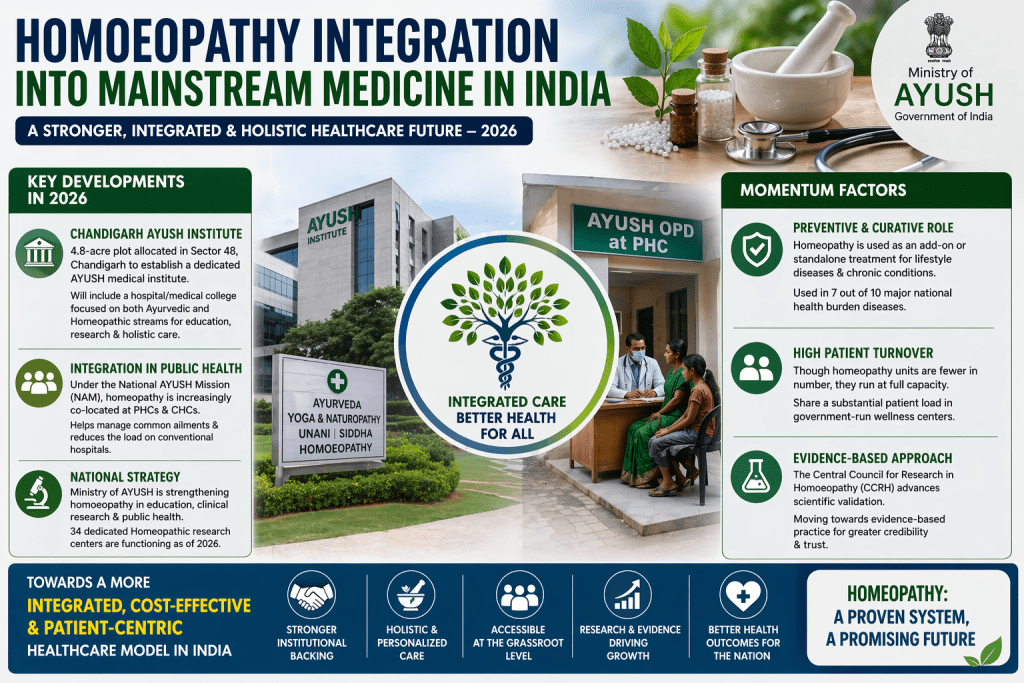
Homeopathy is experiencing a significant shift toward integration into mainstream medicine in India, supported by strengthened institutional backing and public health initiatives.
Key Developments and Initiatives (2026):
- Chandigarh AYUSH Institute: The Chandigarh administration has allocated a 4.8-acre plot in Sector 48 to establish a dedicated AYUSH (Ayurveda, Yoga & Naturopathy, Unani, Siddha, and Homeopathy) medical institute. The facility is intended to include a hospital/medical college focused on both Ayurvedic and Homeopathic streams to enhance education, research, and holistic care.
- Integration in Public Health: Under the National AYUSH Mission (NAM), homeopathy is increasingly co-located at Primary Health Centres (PHCs) and Community Health Centres (CHCs) to manage common ailments and reduce the load on conventional hospitals.
- National Strategy: The Ministry of AYUSH has focused on strengthening homoeopathy in education, clinical research, and public health, with 34 dedicated homeopathic research centers functioning as of 2026.
Momentum Factors:
- Preventive and Curative Role: Homeopathy is being used as an add-on or standalone treatment for lifestyle diseases and chronic conditions, often reported in 7 out of 10 major national health burden diseases.
- High Patient Turnover: Data indicates that while homeopathy units make up a smaller portion of government centers, they often run at full capacity, sharing a substantial patient load in government-run wellness centers.
- Evidence-Based Approach: The Central Council for Research in Homoeopathy (CCRH) is advancing scientific validation, moving the system toward evidence-based practice.
This trend highlights a move toward a more integrated, cost-effective, and patient-centric healthcare model in India.
Post Views: 422