Abstract
Agro homeopathy is an emerging field that applies potentized homoeopathic remedies to enhance plant physiological functions such as enzymatic activity, chlorophyll content, and growth parameters, offering a sustainable alternative to chemical inputs in organic farming. Pioneered by V.D. Kaviraj. Its applications include remedies like Belladonna for plant diseases, Silicea for soil moisture regulation, and Sulphur potencies for improved crop growth, with foliar application commonly preferred.
Parallel to this, limitations of conventional medicine in managing chronic conditions have increased interest in homoeopathy within veterinary practice. Pet owners and organic farmers favor homoeopathic treatments due to concerns about chemical residues, regulatory constraints, cost-effectiveness, and ease of administration. Despite challenges such as non-verbal symptom expression and species-specific responses, homoeopathy has been explored in livestock conditions including mastitis and reproductive disorders. Preliminary studies suggest potential benefits, supporting the role of homoeopathy in sustainable agricultural and animal health systems.
Keywords: Agro homeopathy, Homoeopathic Pharmacy, Sustainable Agriculture, Organic Farming, Potentized Homoeopathic Remedies, Plant Growth Enhancement, Seed Germination, Soil Health Management, Eco-friendly Pest Management, Alternative Agricultural Practices.
Aim
To assess the scope and applicability of Homoeopathic Pharmacy in agriculture and veterinary practice as a sustainable and eco-friendly alternative to conventional methods.
Objectives
- To evaluate the role of agrohomeopathy in plant growth, soil health, and disease management.
- To review the application of homoeopathic remedies in veterinary practice for chronic and non-surgical conditions.
- To document clinical outcomes through representative agricultural and veterinary case studies.
Scope Of Homoeopathic Pharmacy In Agriculture: Agrohomeopathy
Agro – homoeopathy is one of the newest approaches in agricultural research. It is the specialized area of homoeopathic practice used to treat plants. In recent years various scientific studies showed that potentised homoeopathic medicines can alter physiological activities of plants such as altering the rate of enzymatic activities, total sugar, protein and chlorophyll contents in plants. [1]
VD Kaviraj is a Duthc homeopath and pioneer in Agro-homoeopathy. He is the author of the book – Homoeopathy For Farming And Garden which is set out to systematically test homoeopathy remedy on garden plants. He reported his experiences of using belladonna to treat apple tree rust, effect of Helix tosta on snails and slugs, effect of Silicea that enables soil to hold large amount of water and nutrients for long periods, Ultra high dilution of homoeopathic medicines can be used safely for various purposes such as seed germinations, betterment of soil protection against diseases and to overcome environmental stresses, but precautionary measures like proper selection of homoeopathic drugs and its potency, proper dilution of drug with water must be taken before use of these drugs. Agro-homoeopathy can also be practiced by combining with other bio fertilizers; it can reduce the dependency on chemical fertilizers and pesticides.
It is believed that agro-homoeopathy can be a good alternative to conventional farming. It is also a kin eof organic way of farming, In-vitro study of agro homoeopathy was also started with observing the feect of homoeopathic drugs on seeed germination of different crop species. [1]
Route of Administration
Two Types of routes:
- Through roots 2. Through Leaves
- Through roots – Roots take water and nutrients from the soil, so roots are the good route for the administration of medicine. But homoeopathic influence may loseeffect if administrated through roots due to contamination with soil and energetic forces present with the soil.
- Through leaves – Leaves could be considered as to be tongue of the plants. As plants too are made of cells these also could get stressed and become diseased. It is better to spray the remedy as compared to irrigation.
Research In Agro – Homoeopathy:
- Sulphur in potencies of 5CH, 12CH, 30CH, and 1M CH significantly improved radish production and overall plant growth.
- Homeopathically prepared Gibberellic Acid(HGA3) – increases the germination rate of barley seeds and exhibited biphasic action on seed size and root development.
- Alumina and Calc, carb showed positive effects on lettuce seed germination and vigour.
- Nat. mur (in potencies of 6CH and 30CH. Cause significant enhancement in plant growth and increased relative growth rate (RGR). [1]
SCOPE OF HOMEOPATHIC PHARMACY IN VETERINARY PRACTICE VETERINARY HOMOEOPATHTY
Both humans and animals often grapple with chronic conditions for which conventional medicine may offer limited relief. This has led to a surge in the popularity of alternative therapies, particularly in managing chronic illness like allergies and arthritis. Pet owners, dissatisfied with traditional treatments, are increasingly exploring alternative options for their companions. [1]
Similarly, the realm of organic farming has witnessed a growing interest in homoeopathic treatments for livestock. Driven by a commitment to minimizing chemical use, organic farmers view Homoeopathy as a viable alternative to synthetic medications, which are often restricted under organic regulations. This preference is rooted in both ideological and practical considerations. [1]
Ideologically, farmers seek to avoid the use of chemicals, especially antibiotics. Practically, homeopathic remedies are often cheaper, easier to administer, and pose no restrictions on the sale of treated animals or their products. These factors collectively contribute to the appeal of Homoeopathy within organic farming practices, Unlike humans, animals cannot verbally describe their symptoms, making accurate diagnosis difficult. Additionally, animals of different species may react differently to homeopathic remedies compared to humans. The absence of detailed family medical histories, common in humans, also limits the precision of homoeopathic treatment in animals.
Despite these challenges , homeopathy has been explored for various animal conditions, including mastitis in dairy cows, reproductive issues in cattle, and other ailments in diffirent species. While some studies suggest potential benefits, such as lower mastitis rates in Cows. [1]
Case No. 1 Agro-Homoeopathy “Understanding the Sycotic Manifestation on Mangifera indica plant – curative action of Thuja Occidentalis-Q”
Introduction
The illness is mango gall midge Causative organisms: The two main pests that harm mango plants are Procontarinia matteiana and Procontarinia mangiferae. During the summer, the adult midges/insects emerge from the leaves by creating holes. Emerging larvae consume leaves and develop tiny, elevated galls on the underside of the leaves that resemble warts. Mango gall midges, also known as blister midges, infest mango trees, causing damage to blossoms and infesting young fruits, buds, and shoots. They can reduce fruit production by reducing inflorescences and serving as reservoirs for anthracnose inoculums. Adults emerge from leaves, causing distorted leaves and reduced fruit yield.
Objectives:
1. The objective of this study is to evaluate the importance of ultra highdiluted Homoeopathic medicines in agriculture for treating plant disease.
2. Assessing the curative action of Thuja Occidentalis-Q on the Sycotic manifestation found on Mangifera Indica plants.
Methods: Thuja Occidentalis mother tincture 1 ml diluted with 2 ml of distilled water was administered through roots. some of the reviews summarises the articles showing the efficacy of homoeopathy in agriculture and discussed the basic principles of homoeopathy. Kinds of literature were searched in web databases, Google Scholar, PubMed, Research Gate, and Scopus. [4]
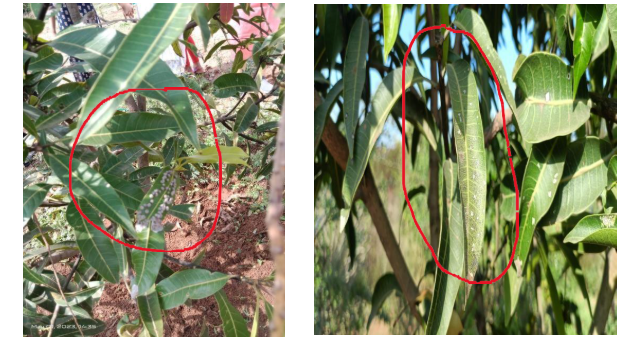
Fig: 01, Affected leaf before treatment Fig: 02, improvement in leaf after treatment
Results: Thuja Occindentalis effectively treated Mango gall midge plants, enhancing growth, soil health, and disease protection. This agricultural homeopathy method reduces agrochemical use by promoting healthy plant growth, retaining soil water, and acting as a natural pesticide.
Case No. 2. Veterinary Case:
AURAL HEMATOMA
Efficacy of Homeopathic medicines in treating a case of aural hematoma in a German shepherd: A Canine case report.
Introduction
The majority of canine aural hematomas are treated surgically, and recurrences are rather common.
Homeopathic remedies, such as Belladonna, Arnica, Hamamelis vir, Conium, Thuja has shown good results in canine Hematoma cases presented in our College hospital.
Today I would like to present one such case
Purpose:
To develop effective Homoeopathy medicines for clinical management in various veterinary cases.
Goal:
Is to show the efficacy of Homoeopathic medicines and document this effective treatment of an aural hematoma.
Case in detail:
A German shepherd, was diagnosed to have left aural Hematoma, it was brought to our college hospital by a veterinary student herself Miss. Aruna with her attendant. Initially a week ago, she expressed this case to her college professor, who suggested surgery, which she did not approve of. Her parents regularly use Homoeopathic medicines for their medical ailments, which prompted her to show this case to us.
Presenting chief complaints :
1.Reduced appetite since a month.
2. Physical activity reduced.
3. Lacrymation
4. Touching the site frequently due to irritation
Case in detail:
Observations:
- Swelling with heaviness in the ear flap with redness.
- Multiple tumorous growths on the left ear flap (15-20mm in size)
- Area was warmth/hot to touch.
- Getting irritated while touching the ear flap, also expressing it with lacrymation.
Diagnosis: Aural Hematoma (already done at her college hospital)
Analysis
Started finding rubric for Hematoma, Rubrics found in CR [5]
Blood; Hematoma: 1 CHRYSANTHEMUM, 1 TRACH-V
Blood; Hematoma; Anguish, After: 1 CHRYSANTHEMUM
Ears; Hematoma: 1 BELL
Generalities; Tumors, Benign; Hematoma: 3 ANGE-S, 1 BELL, 1 BELL-P, 1 BUTH-AUST, 1 CALC-F, 3 CANTH, 1 LED, 1 MERC, 1 SIL, 1 X-RAY
Generalities; Tumors, Benign; Hematoma; Injuries, After: 3 ARN, 3 BELL-P, 2 CON
- Hematoma of the ear – only medicine in CR- Belladonna
- Looking at all other symptoms Belladonna is covering redness, tenderness and irritability
1st Prescription. 2/01/2026
- Belladonna 30c 1 dose oral water doses daily for 1 week.
Follow up:
- 1st Review.
- First 1 week we had a good results where irritability of the dog has reduced.
- It started taking its food
- Redness and tenderness reduced.
- Allowing to touch the ear
- 2nd Review.
- Status co maintained
- It is taking its food, active
- Hematoma is of same size, with no improvement
2nd Prescription 08/01/2026
- We have retaken the case as we found no improvement in the size of the tumor even after 3 weeks. On finding out for any history
- There was the history of box falling on the left ear almost from a height of 7 feet, 3 months back.
- Generalities; Tumors, Benign; Hematoma; Injuries, After: 3 ARN, 3 BELL-P, 2 CON
- Knerr: Tissues; Tumors; Hematoma: 1 Arn, 1 Con
- Prescribed Arnica 30c 1 dose oral water doses same for 1 week.
3rd Prescription 17/01/2026 1. Placebo I dose oral water doses for 15 days.
Results and conclusion
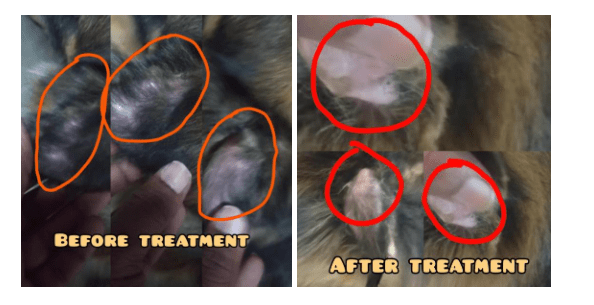
Homoeopathic medications Belladonna and Arnica are proving to be very effective in treating aural Hematoma gently, without causing damage to the body, and promoting a quicker and more economical recovery, with no scalpel damage.
References:
- Banerjee DD. Augmented Textbook of Homoeopathic Pharmacy. 4th revised ed. New Delhi: B Jain Publishers (P) Ltd; 2025.
- Betti L, Trebbi G, Majewsky V, et al. Agrohomeopathy: an emerging field of agriculture for higher crop productivity and protection of plants against various stress conditions. Int J High Dilution Res. 2018;17(1):3–18. Available from: ResearchGate.
- Betti L, Trebbi G, Nani D, Majewsky V. Homeopathy for plant disease control: a review of the literature. J Agric Sci. 2019;11(4):1–12. Available from: Canadian Center of Science and Education.
- Betti L, Trebbi G. Agrohomeopathy: a new tool to improve soils, crops and plant protection against various stress conditions – a review. Horticultura Argentina. 2017;36(90):5–16. Available from: horticulturaar.com.ar.
- Raut AA, Ghosh S. Understanding the sycotic manifestation on Mangifera indica plant and curative action of Thuja occidentalis Q. Int J Adv Res Eng Sci Manag. 2020;6(5):45–49. Available from: ijaresm.com.
- Radar Software Development. Radar Complete Repertory [computer software]. Version current. Mumbai: Archibel SA; Year 2024.
Authors:-
1. Dr. Srinivas Babu Kathi — Professor. PG Guide. Department of Homoeopathic Pharmacy
https://orcid.org/0009-0000-9121-6162
2. Dr. Kavya Boini — Associate Professor.PG Guide. Department of Homoeopathic Pharmacy
http://orcid.org/0009-0001-2130-4439
3. Dr. Raghamouni Bhavana — Assistant Professor. Department of Homoeopathic Pharmacy
(Kaloji Narayanarao University of Health Sciences Warangal, Telangana State.)
Hamsa Homeopathy Medical College
Hospital & Research Centre, Ksheerasagar(V), Mulugu(M), Siddipet Dist. Telangana State