Hemiplegia And Its Homoeopathic Treatment
Definition:
• Hemiplegia refers to the severe or complete loss of motor function on one side of the body. whereas hemiparesis presents as a slight loss of strength. Mild to moderate nerve or brain damage will produce hemiparesis
• Hemiplegia is usually caused by brain damage localized to the cerebral hemisphere opposite the affected side.
• For example, injury to the left side of the brain will cause right hemiplegia and vice versa. Less frequently, brain stem lesions, peripheral nervous system disorders, cervical spinal cord injury and other conditions may present as hemiplegia
Causation
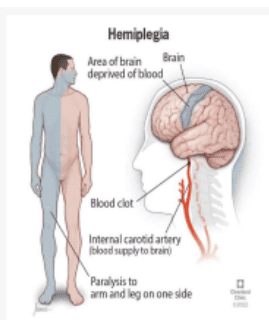
• Strokes or transient ischemic attacks (TIAS).
• Aneurysms and hemorrhages inside of your brain.
• Concussions and traumatic brain injuries (TBIs).
• Spinal cord injuries.
• Injuries you experience during birth or very early childhood, causing conditions like hemiplegic cerebral palsy.
• Congenital conditions.
• Bleeding in between your brain and its outer layers (subdural hematomas or subarachnoid hemorrhages) or between your skull and your brain’s outer membrane (epidural hematomas).
• Brain tumors (including cancers).Nervous system diseases, especially autoimmune and inflammatory conditions, such as multiple sclerosis or progressive multifocal leukoencephalopathy (PML).
• Infections that affect your nervous system, like encephalitis, meningitis or Ramsay Hunt syndrome.
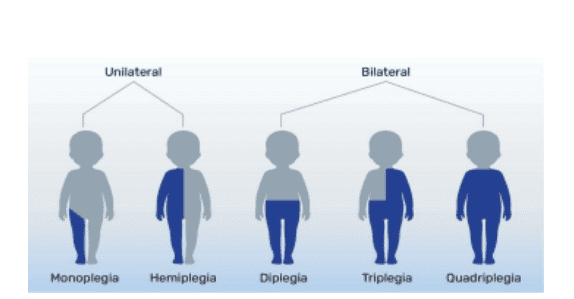
Types of Paralysis
Sign And Symptoms of Hemiplegia
• Severe or complete loss of motor function on only one side of the body.
• Individuals may present with difficulty speaking (often characterized as slurred speech)
• Difficulty swallowing and trouble breathing.
• Individuals with traumatic brain injuries may have a characteristic way of walking, in which they shift their body weight on the affected side, also known as Pusher syndrome.
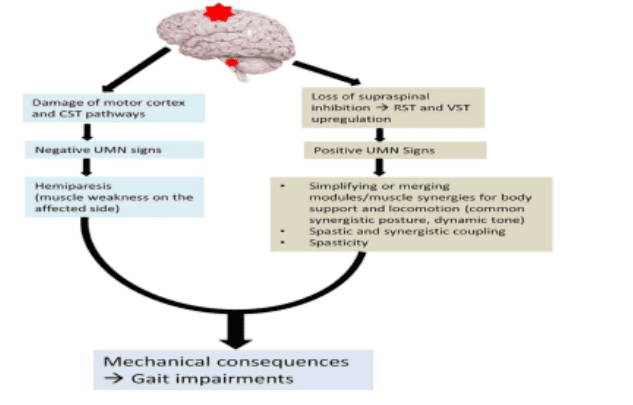
Pathophysiology
Investigation
• Hemiplegia is often diagnosed after reviewing the individual’s past medical history and performing a detailed neurological examination assessing sensory and motor functions.
• Additional tests can be conducted in order to determine the underlying cause of hemiplegia.
• Blood tests, including a complete blood count (CBC), erythrocyte sedimentation rate (ESR), coagulation tests (e.g., PT, aPTT) can help eliminate various underlying causes, such as infections or malignancies.
• Imaging (MRI) and (CT) scans of the head, are necessary in order to exclude most pathologies, including strokes, aneurysms, brain tumors, multiple sclerosis, and injuries.
• (EEG), which measures the electrical activity of the brain, can be used for diagnostic purposes (e.g., reveal the part(s) of the brain from which seizures originate).
Treatment of Hemiplegia
• Medication can be used either for treating the individual’s symptoms or the underlying cause. For example, chlordiazepoxide (e.g., Librium) can be administered to relieve symptoms of anxiety.
• Further medications (e.g., phenytoin) are used to treat recurrent seizures, which frequently present as a complication of brain injury.
• Antibiotics may be used to treat any brain infections.
• Blood thinners, such as warfarin or heparin, can be administered to prevent blood clotting and consequently, strokes.
• In addition, neuromuscular electrical stimulation (NMES), a high-intensity electrical stimulator, used to maintain the size and functionality of the muscles, can help decrease spasticity and increase the individual’s.
Homeopathic Remedy For Paralysis
Aconite.-Paralysis accompanied by coldness, numbness and tingling, traceable to exposure to cold, especially to dry cold winds, mostly in the beginning (Cause, when palsy became chronic), congestion of spinal cord; arms hang down as if paralyzed from heavy blows; crampy, contractive pain in hands and fingers. jactitation of arms; trembling of lower extremities; painful sensitiveness of the body to contact. congestion of blood to single parts, causing great sensitiveness and finally paralysis.
Agaricus-Sense of languor as if the body were bruised and the joints dislocated. sense of weariness and weakness all down the spine; paralysis of lower limbs, with slight spasms of arms. palsy of upper and lower limbs from incipient softening of spinal cord. paraplegia from congestion of the lumbar cord; violent pains in all paralyzed parts. pain in lumbar region and sacrum, < while sitting or during exertion in day time.
Aluminum– Locomotor ataxia; inability to walk except when the eyes are open and in daylight. loss of sensibility of feet: numbness of heel when stepping, tearing in thighs and legs when sitting or lying, < at night. drawing pains in extremities: rheumatic and traumatic paralysis in gouty parents. palsy from spinal disease: arms feel heavy and go to sleep, lower limbs heavy, can scarcely drag them. strength all exhausted after walking in fresh air, with yawning, stretching, drowsiness and inclination to lie down, which only increases the lassitude.
Apis Mel-Paralysis of cerebral origin: paralysis following devitalizing affections, as diphtheria, typhoid’s, suppressed eruptions, meningeal affections. palsy of one side of the body and convulsions of the other. whole nervous system under a paralyzing influence, with general feeling of lassitude and depression.
Argentum Nit– Paraplegia from exhaustion, resulting from concussion or alcoholic excess; hysterical and diphtheriftc paralysis. locomotor ataxia with defective coordination of muscles, staggering in the dark or when eyes are closed. Lassitude of lower limbs. with dizziness as from intoxication; paralytic heaviness and weakness of legs, he does not know where to put them, calves feel bruised after a long journey. paralytic debility of lumbar region and kidneys; feces and urine pass unconsciously and in-voluntarily.
Arnica– Paralysis in consequence of exudation within the brain or spine, of apoplexy, of concussions; of weakening diseases, of protracted intermittent fevers, of ischia; convulsions and tetanic spasms consequent upon mechanical injuries. paralysis of body (right side); jacfttafton of single muscles, twitching in all the limbs. over sensitiveness of the whole body, everything feels too hard; weary, bruised, sore great weakness.
Byronia– Paralysis, generally of both sides, in rheumatic and gouty patients from motion and contact. Legs so weak they will scarcely hold him, knees totter and knock together when walking.
Calcarea Carb– Spinal paralysis from frequent weƫngs, or the result of exhausting sweats, of loss of animal fluids, of sexual excesses causing weakness of back and threatening motor paralysis or locomotor ataxia. palsy of upper extremities to the fingers with coldness.
Cannabis Ind-Paralysis with tingling in (Acon.,Staph.) trembling with mental weakness, especially of lower limbs and right arm intensely violent pains on attempting to walk, as if he trod on a number of spikes, with stiffness and tired aching in both knees; great desire to lie down.
Causticum– Chronic paralysis from dry, cold weather, especially during the intense cold of winter, of single parts or of single nerves, as of facial nerve, ptosis; paralysis of tongue when deglutition and speech are more or less destroyed; palsy of lips; glosso-pharyngeal palsy, sometimes involving vocal cords; hemiplegia of opposite side of body as the sequela of apoplexy; gradually appearing palsies; pains in paralyzed parts increase when lameness decreases. one sided paralysis, especially of flexor muscles; sensibility mostly intact; catarrhal and rheumatic conditions; suppressed chronic eruptions; weeping mood, hopelessness, fear of death.
China– Paralysis from loss of fluids, after arsenical poisoning, onanism; numbness of parts on which he lies.
Cicuta– Paralysis from concussion of the brain; violent spasmodic pains, paroxysmal, in paralyzed lower limbs, with involuntary trembling during remission; painful feeling of stiffness in the muscles of the lower limbs; frequent involuntary jerking and twitching in limbs, followed by complete loss of power; deadness of fingers; bruised sensation on many parts of the body
Gelsemium– Functional paralysis of motory nerves, leaving sensory ones normal, or hyperasthetic. Infantile paralysis, complete relaxation of entire muscular system; sensation of heaviness in limbs, muscles weak and unable to obey the will, feel bruised and cold; tingling, creeping, crawling; sore, < on moving eyes; dysphagia and aphonia from muscular failure. paraplegia, unsteady gait and trembling of hands when lifting them up; post-diphtheritic palsies; mental exertions cause a sense of helplessness from brain weakness; paralytic and spasmodic symptoms from reflex irritation; > from stimulants.
Ignatia– Hysterical paraplegia, after great mental emotion and night-watching in the sick-chamber, languor and trembling of limbs; taciturn and resigned.
Kali carb– Paralytic weakness, with cramps in hands and fingers, also in hip-joint; paresis with trembling, frequent and violent vertigo, sudden attacks of unconsciousness, totters as if intoxicated, better in fresh air; arms feel numb and cold, covered with purple spots; faint and weak after a walk, limbs go to sleep even after a meal.
Lachesis– Paralysis, left side, after apoplexy or cerebral exhaustion; tingling prickling in limbs; trembling of hands in drunkards; awkward stumbling gait; head heavy as lead, < about occiput, with vertigo; flushes of heat.
Rhus Tox– Myelifts of the anterior horns (infantile paralysis).Lameness in all extremities and joints, with stiffness, worse on rising after having been seated for a long time, sensation not much impaired; palsy of one side of the lower extremities, with dragging, slow. Difficult walking; rheumatic palsies from exposure to wet, strains, or excessive exertions, with painful stiffness, tingling and numbness; paralysis.
Silicea– Paralysis from defective nutrition of nervous system, with over-suscepftbility to nervous stimuli; brain and spine cannot bear ordinary vibration or concussion: skin tender and sensitive to touch; paralysis as a sequel to convulsions, paralytic difficulty in swallowing, paralysis of left hand, with atrophy and numbness of fingers; paralysis of legs, < mornings, with heaviness of head and ringing in ears; progressive sclerosis of posterior column, sense of great debility, wants to lie down; limbs go to sleep easily, are sore, lame and cold; trembling of legs, as if he had lost all power over them; wandering pains, passing quickly from one part of body to another.
References
1. API Textbook of Medicine 10th Edifton
2. Harrison’s Principles of Internal Medicine 20th Edition
3. Homoeopathic Therapeutics By Samuel Lilienthal
4. Homoeopathic Materia Medica With Repertory By William Boericke
5. https://my.clevelandclinic.org/health/symptoms/23542-hemiplegia