Epilepsy’s Enigma: Can Homoeopathy Offer a Non-Conventional Path to Seizure Control ?
Abstract
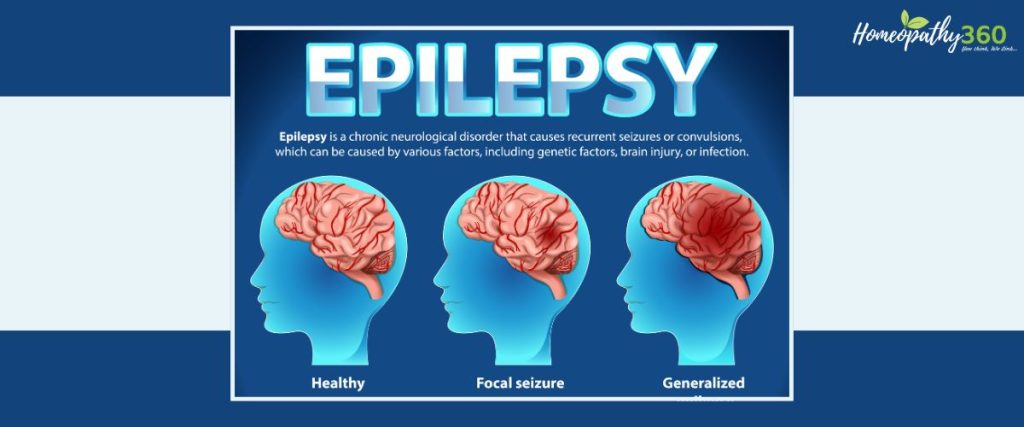
Epilepsy is a chronic brain disorder characterized by recurrent, unprovoked seizures. It affects roughly 50 million people globally and is a major public health issue, significantly impacting a person’s quality of life, including their career, relationships, and education. A seizure is a brief episode of involuntary movement caused by excessive electrical discharges in a group of brain cells. Seizures can range from subtle muscle jerks or brief lapses in attention to severe, full-body convulsions, sometimes involving a loss of consciousness or bladder/bowel control. They can be partial (affecting a part of the body) or generalized (affecting the entire body), and their frequency varies widely. It’s important to know that one seizure doesn’t mean a person has epilepsy; up to 10% of people have a single seizure in their lifetime. A diagnosis of epilepsy requires two or more unprovoked seizures. Despite being one of the world’s oldest recognized conditions (with records back to 4000 BCE), epilepsy has long been associated with fear, misunderstanding, discrimination, and social stigma. This stigma persists today and negatively affects those living with the disease and their families. Homeopathy approaches epilepsy with a focus on individualized treatment, meaning the remedy is chosen based on a person’s complete set of unique physical, mental, and emotional symptoms, rather than just the diagnosis of epilepsy.
Keywords: Epilepsy, Individualized Homoeopathy, Seizure, Neurological Disorder
Introduction
Epilepsy Is a common neurological disease, contributing to 0.5% of the total global disease burden, with the highest rates in regions like sub-Saharan Africa, Central Asia, and Southeast Asia (where the prevalence is about 6 per 1,000 people, and 5.59 per 1,000 in India). The researchers conducted a study to determine if adding individualized homeopathic medicines (IHMs) to the standard care (SC) of anti-epileptic drugs (AEDs) would produce a significantly better outcome in treating pediatric epilepsy compared to adding a placebo.[1]
Epilepsy is a chronic brain disorder defined by recurrent seizures that are caused by abnormal electrical activity in the brain. It isn’t a single condition but rather a group of disorders that all share an underlying brain dysfunction that makes a person more prone to having seizures.[2] According to one study, Epilepsy is a chronic neurological disease affecting approximately 50 million people worldwide that is defined by the tendency to have two or more unprovoked, recurrent seizures. A seizure is a brief episode of temporary symptoms—such as loss of consciousness, altered movement, or sensory disturbances—caused by abnormal, excessive electrical discharges in a group of brain cells. While a single seizure does not constitute epilepsy, the condition itself is a serious global public health concern with high rates in regions like Sub-Saharan Africa and Asia, and it often leads to physical injuries, psychological issues like anxiety and depression, and a threefold higher risk of premature death compared to the general population. Although the disease is not contagious and many potential causes exist (categorized as structural, genetic, infectious, metabolic, or immune), the cause remains unknown in about 50% of cases globally. In India, the age-standardized prevalence is estimated at 5.59 per 1,000, translating to 5.5 million people, with the main concern being a massive treatment gap exceeding 70% in rural areas. While conventional medicine focuses on anti-seizure drugs, homeopathy is sometimes used as a complementary, individualized treatment, but lacks strong scientific evidence to replace standard medical care.[3] In a recent meta-analysis, the overall rate of new epilepsy cases being diagnosed each year—known as the pooled incidence rate—was found to be 61.4 per 100,000 people. The risk of developing epilepsy is slightly higher for men than for women, and it is most elevated among the youngest and oldest age groups.[4] Despite a limited amount of research on epilepsy and homeopathy, a few studies have yielded hopeful findings. For instance, one small, uncontrolled clinical trial demonstrated a positive effect of homeopathic medicine on infantile spasms. [5]
Causes
Epilepsy is not a contagious disease. Globally, the exact cause of epilepsy remains unknown in about 50% of cases, despite many different disease processes that can lead to it. When a cause is identified, it falls into one of these categories: structural, genetic, infectious, metabolic, immune, or unknown.
Common examples of identified causes include:
- Brain injury sustained before or around birth (like lack of oxygen or trauma).
- Genetic syndromes and congenital abnormalities involving brain malformations.
- Consequences of a severe head injury or a stroke (which restricts oxygen to the brain).
- Brain infections, such as meningitis, encephalitis, or neurocysticercosis.
- The presence of a brain tumor.[6]
Signs and symptoms
The specific features of an epileptic seizure—including temporary loss of awareness, altered movement, changes in sensation (like vision, hearing, or taste), mood swings, or cognitive disturbances—depend entirely on where in the brain the electrical disturbance begins and how far it extends. Beyond the seizures themselves, people with epilepsy face greater health risks, including more physical injuries (like fractures or bruising) and higher rates of psychological issues such as anxiety and depression. Tragically, the risk of premature death for those with epilepsy is up to three times higher than for the general population. This elevated mortality is particularly notable in low- and middle-income countries and rural areas, often due to preventable causes like falls, drowning, burns, and prolonged seizures.[6]
Key points
- Epilepsy is a chronic, non-contagious disease of the brain affecting all age groups.
- It is one of the most common neurological diseases globally, with approximately 50 million people worldwide living with the condition.
- The disease burden is disproportionately high, as nearly 80% of people with epilepsy reside in low- and middle-income countries.
- A major issue is the treatment gap: three-quarters of people with epilepsy in low-income countries do not receive the treatment they need.
- This gap is tragic because an estimated up to 70% of people with epilepsy could live seizure-free if they were properly diagnosed and treated.
- Individuals with epilepsy face significant health risks, including a risk of premature death up to three times higher than the general population.
- In many parts of the world, those with epilepsy and their families continue to suffer from significant stigma and discrimination.[6]
Social and economic impacts
Epilepsy significantly impacts global health, accounting for over 0.5% of the total burden of disease. This measurement reflects not only the years of life lost due to premature death but also time spent living with impaired health. The disorder also carries substantial economic consequences due to healthcare requirements, lost work productivity, and early mortality. These costs and lost wages often create a major financial burden on individual households. Research, such as an economic study in India, suggests that public funding for both initial and advanced treatment and related medical costs is a practical and cost-effective way to ease this financial strain.
Beyond the physical and economic toll, the stigma and discrimination surrounding epilepsy worldwide can be as challenging as the seizures themselves. Individuals with epilepsy and their families frequently face prejudice. Widespread myths—such as believing the condition is contagious, incurable, or caused by immoral behavior—can lead to social isolation and discourage people from seeking the necessary medical treatment.[6]
Prevention
Up to 25% of all epilepsy cases are potentially preventable through targeted public health measures.
Here are the key strategies for prevention:
- Preventing Head Injury: Reducing accidents such as falls, traffic incidents, and sports injuries is the most effective approach to preventing post-traumatic epilepsy.
- Improving Prenatal and Perinatal Care: Providing adequate care during and immediately after birth can significantly reduce new epilepsy cases caused by birth injuries.
- Managing Fever: Using medication and other methods to lower the high body temperature of a feverish child can decrease the risk of febrile seizures.
- Preventing Stroke-Related Epilepsy: This focuses on reducing cardiovascular risk factors, including:
- Controlling conditions like high blood pressure, diabetes, and obesity.
- Discouraging tobacco use and excessive alcohol consumption.
- Controlling Infections (Especially in Tropical Regions): Central nervous system infections are a common cause of epilepsy in low- and middle-income countries. Global epilepsy rates can be reduced by:
- Eliminating parasites in these environments.
- Educating communities on how to avoid infections (e.g., those that cause neurocysticercosis).[6]
Because of the numerous side effects of conventional epilepsy medications, many patients look for alternative treatments. Homeopathy is a frequently chosen option, where practitioners use different remedies based on a holistic approach. Instead of having a single remedy for the disease, homeopathy addresses the patient’s physical and mental symptoms, along with any underlying triggers. The treatment is individualized, meaning the medicine is selected only after considering the patient’s complete picture, including their physical health, mental state, emotions, and social background, aiming to provide a gentle cure.
Homoeopathic Medicines For Epilepsy
Calcarea carbonica. The treatment of epilepsy should be directed to the underlying dyscrasia, as this is at fault in most, if not all, cases. Calcarea carbonica, with its rickety, tuberculous, scrofulous and flabby symptoms, its characteristic deficiency of lime assimilation, as shown in children by the open fontanelles and backward dentition, will frequently be the remedy with which to commence the treatment. The characteristic relaxation on falling asleep and the sweating of the head and neck are fine indications for its use. It has an excellent clinical record. An epileptic suffering continually from the dread of an attack will withdraw himself as much as possible from the outside world, brood over his affliction and become melancholic, and there is no other remedy so well adapted to this condition as Calcarea. Its anxiety, palpitation, apprehensive mood, despondency, fretfulness and irritability, its weakness of memory, its loss of consciousness, its vertigo and convulsions are prominent and characteristic indications for its use in epilepsy. If epilepsy be caused by fright, suppression of some long standing eruption, onanism or venereal excess it will probably be one of the remedies to use in the course of the treatment, and here it would follow Sulphur well. The aura may begin in the solar plexus and pass upwards like a wave, or go from the epigastric region down to the uterus and limbs. Like Sulphur it has a sensation as if a mouse were running up the arm previous to the attacks. Causticum, too, is closely allied to Calcarea, and is indicated in epilepsy connected with menstrual irregularities and also in epilepsy occurring at the age of puberty [7]
Bufo rana. Epilepsy arising from fright, or self-abuse, or sexual excesses, will often find its remedy in Bufo rana. The aura preceding the attacks starts from the genital organs; even during coitus the patient may be seized with violent convulsions. In another form for which Bufo is suitable the aura starts from the solar plexus. Previous to the attacks, the patient is very irritable, often talks incoherently and is easily angered. It is especially in the sexual form that brought on by masturbation, that Bufo is signally useful. It has also proved useful in severe cases in children where the head in the convulsion is drawn backwards.
Indigo has epileptiform convulsions from the irritation of worms, but the patient must be low-spirited and sad-“blue as indigo. “It is the “bluest remedy in the materia medica.” Dr. Colby, of Boston, considers it superior to the bromides. Flushes of heat seem to rise from the solar plexus to the head and there is an undulating sensation in the brain similar to Cimicifuga. Bufo, like Nux vomica, is vehement and irritable. These two remedies and Silicea and Calcarea have the aura starting from the solar plexus. Stannum is also a remedy for epilepsy arising from reflex irritation, as from worms and also from sexual complications. [7]
Cuprum metallicum. Cuprum is a very deep-acting remedy, its well-known power of producing convulsions and spasms and its excellent clinical record make it a valuable remedy in epilepsy. We know positively that poisonous doses of Cuprum cause epileptic paroxysms, and it is among the most curative remedies for epilepsy in child life. The convulsions start from the brain, though the aura, which is one of long duration, seems to center in the epigastrium. Owing to this long duration of the aura consciousness is not immediately lost, and the patient will often notice the contractions in the fingers and toes before they become unconscious. The face and lips are very blue, the eyeballs are rotated, there is frothing at the mouth and violent contractions of the flexors. The attack is usually ushered in by a shrill cry and the cases are most violent and continued. It is also a remedy for nocturnal epilepsy when the fits occur at regular intervals, such as the menstrual periods. Epileptiform spasms during dentition or from retrocessed exanthema may indicate Cuprum. Dr. Halbert remarks that Cuprum will stop the frequency of the attacks more satisfactorily than any other remedy, it is his sheet anchor in old and obstinate cases. Butler also claims his best results from this remedy. Argentum nitricum is also a remedy for epilepsy, the strong indicating features being the dilated pupils four or five days before the attack, and the restlessness and trembling of the hands after the attack. Menstrual and fright epilepsies often call for this remedy the characteristic being the aura, which lasts a number of hours before the attack. Moral causes may lead to an attack. Patient is low spirited, easily discouraged and frightened.
Enanthe crocata. Perhaps no remedy in the materia medica more closely pictures epilepsy than Enanthe. Its use in the disease has been mainly from clinical data, but there is ample proof from studying toxic cases that it is homœopathic to many cases of epilepsy. The reliable and practical symptoms calling for its use may be summed up as follows: Sudden and complete loss of consciousness; swollen livid face; frothing at the mouth; dilated or irregular pupils; convulsions with locked jaws and cold extremities.
Dr. S. H. Talcott, of the Middletown State Hospital, sums up his experience with the remedy as follows:
I. The fits decrease in number 40 to 50 per cent.
2. The convulsions are less severe than formerly.
3. There is less maniacal excitement before the fits.
4. Less sleeplessness, stupor and apathy after the fits and the debilitating effects of the attacks are more quickly recovered from.
5. The patients treated with Enanthe are less irritable, less suspicious and less fault finding.
6. The patients are more easily cared for.
The writer can add his testimony to the effect of Enanthe in controlling attacks of epilepsy. It seems to act better in the 3x or 6x potency than in the tincture. Cases of cure of the disease are becoming more and more numerous. Artemisia vulgaris is another remedy which has been successfully used for epilepsy from fright or some mental emotion, where the attacks occur in rapid succession, and also in petit mal, where the patient is unconscious only for a few seconds and then resumes his occupation as if nothing had happened. Artemisia absinthinum indicated in seizures preceded by vertigo, a warm sensation rising from the stomach, and by a slight impairment of speech, and Solanum Carolinense are also remedies which in some cases have wrought cures, the latter according to Dr. N. Emmons Paine, remarkably reduces the attacks. Dr. Halbert, of Chicago, also praises it. Melancholia seems to be an indication and also attacks appearing at menstrual periods. [7]
Kali bromatum. This remedy should have no place in the homœopathic treatment of epilepsy; it is given here because it is the principal drug employed by the allopathic school, and because nearly all cases coming to us for treatment from old school hands are liable to be complicated by a previous treatment with the bromides, notably the Bromide of Potash. It is not a curative remedy, but a palliative one; it strikes at the attack and not the disease. It will often modify the attacks, and used as a prophylactic may avert the seizure, but its prolonged use works inevitable harm. It weakens the mental faculties and hastens imbecility. Camphora is useful to prevent the attacks, shorten the duration and lessen the intensity. It is indicated by all the characteristics of epilepsy and hence is a safer prophylactic than the Bromide of Potash. Camphora, Nux vomica and Zincum are mentioned as antidotes for the abuse of the Bromide of Potash. [7]
Silicea. Silicea is one of our most valuable remedies in epilepsy. It suits especially scrofulous and rickety subjects. The aura starts from the solar plexus, as in Bufo and Nux vomica. Certain phases of the moon are said to affect the attacks, which are brought on by an overstraing of the mind or emotions. Nocturnal epilepsy, feeling of coldness before an attack is also characteristic of the drug, and the fit is followed by warm perspiration. Cuprum is also a remedy for nocturnal epilepsy and must be thought of when attacks invariably occur in the night. When Silicea is required there is an exalted susceptibility of the upper spinal cord and the medulla and an exhausted condition of the nerves. The attacks occur about the time of the new moon. It comes in after Calcarea in inveterate chronic cases, and coldness of the left side of the body preceding the attack is very characteristic.
Nux vomica. The characterizing feature of epilepsy is loss of consciousness, therefore, Nux vomica is not often a remedy in the idiopathic form. It suits cases arising from an excess of the reflex action caused, for instance, by indigestion. The aura in a case calling for Nux starts in the solar plexus, and among the most characteristic symptoms is a sensation of ants crawling over the face. The middle and higher potencies will be found more useful in the spinal form of epilepsy, and this is the form most suitable to Nux. Plumbum has caused epilepsy, and we may use it for these symptoms: the attack is preceded by a heaviness of the legs and is followed by paralysis; epileptic seizures from sclerosis, or from tumors of the brain, consciousness returning slowly after an attack is another indication and it is more suitable to the chronic forms of the disease. Constipation and abdominal pains further indicate. [7]
Secale is recommended for sudden and rapidly recurring convulsions, with rapid sinking of strength and paralysis of the spinal nerves.
Cicuta virosa. The indications for Cicuta are sudden rigidity followed by jerks and violent distortions, and these followed by utter prostration. The prostration is characteristic, being equalled only by that of Chininum arsenicosum. There is a tonic spasm renewed by touch simulating Strychnia; but in Cicuta there is loss of consciousness, thus resembling more the epileptiform. There is great oppression of breathing, lockjaw, face dark red, frothing at the mouth and opisthotonos. The reflex excitability under Cicuta is much less than under Strychnia. Another characteristic of Cicuta is fixed staring eyes; others are trembling before and after the spasm and strange feeling in the head preceding the attack. Bayes, however, regards muscular convulsions as a especially prominent symptom for Cuprum.
Sulphur. Like Calcarea, Sulphur is a constitutional or basic remedy, and it will act well where there is a scrofulous taint. It is useful for the same class of cases as is Calcarea; namely, those brought on by sexual excesses or the suppression of some eruption. The convulsions are attended with great exhaustion and it is suitable to the chronic form of epilepsy in children who are typical Sulphur patients. There is perhaps a tendency to fall to the left side. Sulphur is also a useful intercurrent remedy in the course of the treatment of an epilepsy. Psorinum may also be needed as an intercurrent.
Hyoscyamus. In epileptic convulsions Hyoscyamus is a most valuable remedy. There is much twitching and jerking and hunger previous to the attack, there is frothing at the mouth and biting of the tongue. A violent fright will produce an attack that will call for Hyoscyamus. The convulsions seem to have more of a hysterical nature, and there are illusions of sight and hearing.
Stramonium has epilepsy from fright, sudden loss of consciousness and jerking of the head to the right, with rotary motion of the left arm. Stramonium is the opposite of Belladonna, for whereas the Belladonna patient shuns light, fears noises and is sensitive in the highest degree, the Stramonium patient fears darkness and hates to be alone; he acts like a coward and trembles and shakes. [7]
Agaricus 30 cured a case of epilepsy of 22 years’ standing for Dr. Winterburn. He was led to its prescription by the unusual symptom of “great flow of ideas and loquacity after the attack.”
Belladonna. Belladonna is especially a remedy for acute epilepsies, when the cerebral symptoms are prominent, where the face is flushed and the whole trouble seems to picture cerebral irritation, and more especially if the patient be young. There is an aura as if a mouse were running over an extremity, or of heat rising from the stomach. There are illusions of sight and hearing, and the convulsions are apt to commence in an upper extremity and extend to the mouth, face and eyes. The great irritability of the nervous system, the easily disturbed sleep, the startings, the tremors and twitchings and the general Belladonna symptoms will render the choice easy. Atropine, the alkaloid of Belladonna, has also been used successfully in the treatment of epilepsy.
Hydrocyanic acid. Another remedy is Hydrocyanic acid, to which Hughes ascribes specific powers in the disease. In recent cases it is perhaps our best remedy. The cases calling for it will be characterized by loss of consciousness, clenched hands, set jaws, frothing at the mouth, inability to swallow, and the attack is followed by great drowsiness and prostration. Children are disinclined to play and take but little interest in anything. It is one of our mainstays in epilepsy and its clinical record ranks it high.
Causticum. Causticum is useful in Petit mal, also when the patient falls while walking in the open air, but soon recovers. It is said to be useful when the attacks occur at new moon. In menstrual epilepsy and that occurring at puberty Causticum is the remedy. Kafka recommends Hepar in nocturnal epilepsy. Causticum is perhaps better suited to recent and light cases. Another preparation of potash, Kali muriaticum, is a most useful remedy in epilepsy; it has an affinity for the nerve centers and it is a slow acting remedy. [7]
References:
- Gupta B, Misra P, Karuppusamy A, Balamurugan D, Parewa M, Tomar M, et al. Individualized Homeopathic Medicines as Adjunctive Treatment of Pediatric Epilepsy: A Double-Blind, Randomized, Placebo-Controlled Trial. Homeopathy. 2023;112(03):170–83.
- Sirven JI. Epilepsy: A spectrum disorder. Cold Spring Harb Perspect Med. 2015;5:a022848.
- Sridharan R, Murthy BN. Prevalence and pattern of epilepsy in India. Epilepsia. 1999 May;40(5):631–6.
- Fiest KM, Sauro KM, Wiebe S, Patten SB, Kwon CS, Dykeman J, et al. Prevalence and incidence of epilepsy: A systematic review and meta-analysis of international studies. Neurology. 2017;88:296–303.
- Kumari S, Kalra N. Homoeopathy for infantile spasms: An open label, single arm, clinical trial. Indian J Res Homoeopathy. 2021;15:173–83.
- World Health Organization. Epilepsy [Internet]. [cited 2025 Oct 3]. Available from: http://www.who.int/news-room/fact-sheets/detail/epilepsy
- Dewey WA. Practical Homoeopathic Therapeutics. New Delhi: B. Jain Publishers Pvt. Ltd; 2002.
Author’s Details
Dr. Shweta Patel [1], Dr. Srabani Pal [2],Dr. Puja Dabhi[3], Dr Nitish Kumar Kanaujiya[4]
1 Professor & HOD, Department of Homoeopathic Pharmacy, Sumandeep Homoeopathic Medical College & Hospital, Sumandeep Vidyapeeth, Deemed to be University, Vadodara, Gujarat.
2 Professor & HOD, Department of Human Anatomy, Sumandeep Homoeopathic Medical College & Hospital, Sumandeep Vidyapeeth, Deemed to be University, Vadodara, Gujarat.
3. Associate Professor, Department of Homoeopathic Materia Medica, Sumandeep Homoeopathic Medical College & Hospital, Sumandeep Vidyapeeth, Deemed to be University, Vadodara, Gujarat.
4, Assistant Professor, Department of Human Anatomy, Sumandeep Homoeopathic Medical College & Hospital, Sumandeep Vidyapeeth, Deemed to be University, Vadodara, Gujarat.