Athletes at every level wonder how they can bounce back quicker from injuries. Active lifestyles come with inevitable injuries – from small strains due to overtraining to serious fractures.
A proper diagnosis helps athletes return to their sport quickly. Professional athletes recover faster when they get physical therapy right after an injury. They also pay attention to their nutrition and stay hydrated. Regular people need 1.3-1.8 grams of protein per kilogram of body weight each day to heal. Athletes might need 1.6-2.5 g/kg/day.
Recovery requires more than just resting. Simple rest without strength work can make muscles weak and guide you toward another injury. On top of that, keeping up your cardio fitness during recovery helps you get back by a lot faster. Smart recovery combines the right exercises, proper nutrition, and targeted workouts. This approach helps athletes heal faster and protects them from future injuries.
Understand Your Injury
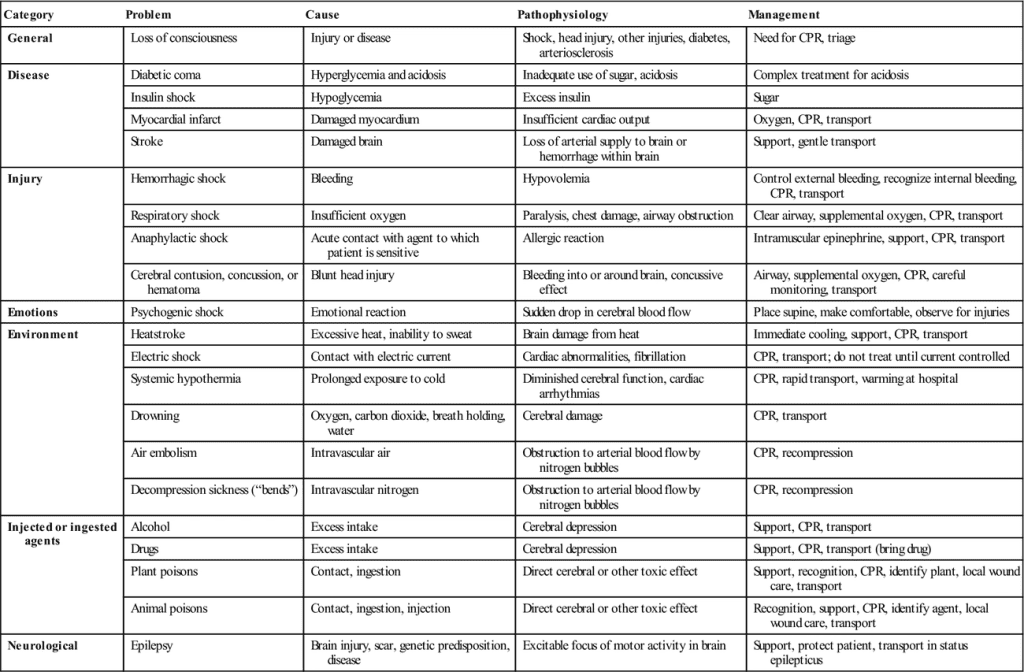
The key to recovering from an injury starts with finding out what’s wrong. The way an athlete gets back to their sport quickly depends on identifying the exact problem and choosing the right treatment approach.
Understand your injury causes
Sports injuries usually happen in one of three ways: overuse, direct trauma, or when the body takes more force than it can handle. The difference between acute and chronic injuries plays a vital role in treatment. Athletes get acute injuries suddenly – like twisting an ankle during landing – while chronic injuries build up over time as muscles, tendons, or joints face repeated stress.
Athletes face two main types of trauma: direct (from a hit or blow) and indirect (too much force along the muscle-tendon-bone line). These create three kinds of acute muscle injuries: contusions, strains, and tendon avulsions.
Muscle strains often hit the lower body. Athletes feel a sharp pain in one muscle area during eccentric contraction that stops them from continuing. The risk goes up with eccentric movements, muscles with fast-twitch type 2 fibers, quick changes in muscle work, or when muscles cross multiple joints like the biceps femoris, rectus femoris, and gastrocnemius.
Common causes of sports injuries include:
- Falls, accounting for more than 25% of sports injuries
- Training too hard or too long
- Getting hit by equipment or another player
- Bad technique or wrong equipment
- Skipping proper warm-up
Why understanding your injury speeds up recovery
Getting a full picture of your injury helps you heal better. Studies show that full rehabilitation prevents many future problems. A good grasp of injury risk factors helps create better recovery plans that reduce how often and badly athletes get hurt.
Sports injuries do more than just physical damage. Injured athletes might face mental health challenges like anxiety, eating disorders, depression, and thoughts of suicide. These injuries often end athletic careers, which can affect both physical and mental health after sports.
MRI results help predict recovery times. Research shows a clear link between MRI grades of acute hamstring strains and when athletes can play again—higher grades need longer recovery. The size of the injury seen on MRI also matches recovery time – bigger injuries take longer to heal.
Finding injuries early leads to faster treatment and stops things from getting worse. The best way forward is to get a proper diagnosis from a sports health expert, though this isn’t always possible.
How to assess your injury properly
Start by looking for symptoms. An injury usually comes with pain, tenderness, swelling, bruising, or trouble moving the hurt area. These signs might show up hours after playing sports.
Healthcare providers usually diagnose sports injuries by:
- Getting details about the injury
- Asking about recent training changes
- Doing a full physical exam
- Using X-rays or MRI scans when needed
When checking yourself, figure out how you got hurt. Look for direct hits and note where they landed, how they hit, and which way the force came from. Think about how hard the impact was and if any twisting happened.
Stop your workout right away if something hurts, whether it just happened or has been bothering you for a while. Working out with an injury can make things worse and slow down healing. See a doctor if you notice:
- Bad pain, swelling, or bruising
- Pain and swelling that stays for days
- Can’t put weight on the hurt area
- Something looks out of place
A complete injury check should look at both function and movement patterns. The functional part needs to match your sport and might check things like agility, coordination, power, and flexibility.
Note that getting hurt before makes you more likely to get hurt again. That’s why understanding and properly healing the original injury becomes crucial for staying healthy and performing well in sports.
Give Your Injury What It Needs
The way you treat an injury right after it happens can affect your recovery time by a lot. Once you know what’s wrong, giving your injury exactly what it needs becomes the next crucial step to heal properly.
Balancing rest and movement for injury recovery
Recent research has changed the old approach of complete rest after injury, new recovery methods for sports injury recovery are popping up. Your body rarely needs complete immobility for most soft tissue injuries. Studies show that for most injuries, complete rest guides you toward longer recovery times, higher rehabilitation costs, and more time away from activity and sport.
The secret lies in striking the right balance between rest and movement. Rest plays a vital role during the first 24-72 hours after injury to prevent more damage and let your body start healing. This doesn’t mean you should do nothing at all. After the first 48-72 hours, gentle movement helps healing because it encourages blood flow to injured tissues.
The “3 out of 10” rule works as an excellent guideline for activity, where “0” means no pain and “10” means severe pain. You can work through mild discomfort (up to 3/10 on the pain scale) as long as you rest enough afterward. This approach:
- Enables client autonomy and self-management
- Helps pain-avoidant people work confidently into the right level of symptoms
- Makes “over-doers” more aware to avoid the boom-bust cycle of flare-ups and too much rest
Dr. Carr, a sports medicine specialist, says: “If you were off for a week because of a shoulder injury, plan to take two weeks to get back to where you were before the injury”. This accounts for your body’s overall deconditioning during recovery, not just at the injury site.
How to apply RICE effectively
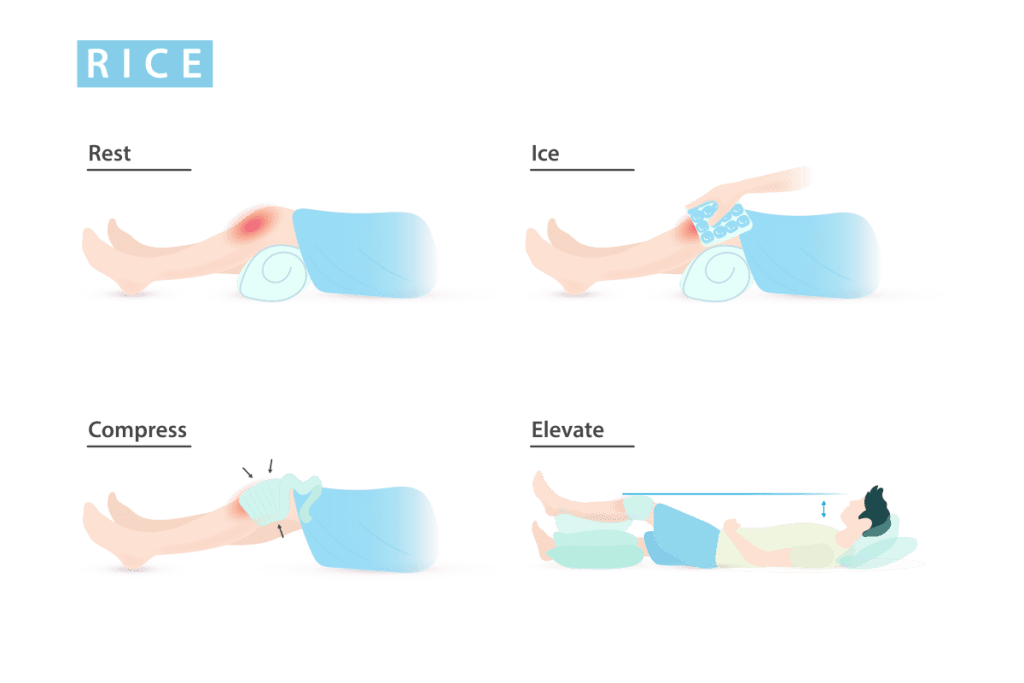
The RICE method – Rest, Ice, Compression, and Elevation – are the foundations of treating injuries, especially in the first 72 hours. Each part has a specific job to control inflammation and promote healing:
Rest: Keep the injured area inactive for the first few days. Healthcare providers now suggest avoiding stress on your injured part briefly, then slowly adding movement, and stopping if pain occurs. Most injuries don’t need more than 48-72 hours of complete rest.
Ice: Cold reduces pain and limits bleeding from trauma. Apply ice packs for 10-20 minutes, 3-8 times daily during the first 48 hours. Put a towel between the ice and your skin to prevent frostbite. Modern approaches recommend icing for 10 minutes, waiting 20 minutes, then repeating once or twice more.
Compression: An elastic bandage (like an ACE wrap) around the injured area helps reduce swelling. Make it snug but not tight-loosen it if you feel numbness, tingling, increased pain, coolness, or swelling below the bandage. Compression controls severe swelling and keeps wounds from reopening.
Elevation: Raise the injured area above your heart’s level whenever possible, especially while icing or resting. This slows blood flow to the injury, lowers blood pressure, limits bleeding, and helps your lymphatic system drain excess fluid.
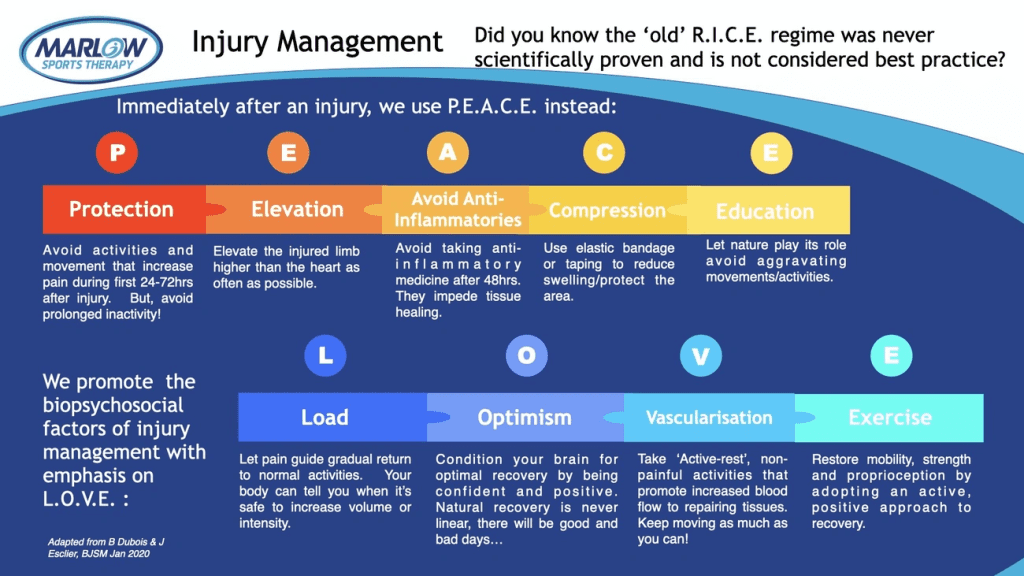
RICE works best during the acute phase of injury. Healthcare providers now recommend other protocols like MEAT (Movement, Exercise, Analgesia, Treatment) or PEACE & LOVE for recovery after the first 72 hours.
When to start strength training
You need to time your return to strength training carefully. After the first 48-72 hours of recovery, you can start gentle strengthening exercises that don’t cause much pain.
Start by making sure you can handle daily activities normally. Dr. Carr points out, “If you twinged your knee, and it hurts when you’re doing the dishes or walking up and down stairs, it’s going to hurt if you go for a four-mile run“. Your joints should move freely without pain before adding weight.
Here’s how to return to strength training:
- Begin with light exercises that focus on flexibility and range of motion through active stretching
- Move to bodyweight exercises, resistance bands, or light weights before trying heavier loads
- Cut your normal weight or intensity by 30-40% at first
- Add more weight as your strength improves
- Watch your form closely to avoid movements that could cause new injuries
Note that injuries can weaken not just the hurt area but your whole body. This overall weakness, plus changes you make to protect weaker spots, might lead to new injuries if you rush your comeback.
Your exercise plan should first focus on restoring balance, developing reflex control, rebuilding neuromuscular function, and strengthening injured tissues. Later, you can move toward overall fitness and more challenging strength, endurance, and neuromuscular training.
Your body knows best throughout this process. Modify your form or reduce intensity if exercise causes pain. You’ve probably pushed too hard if you feel sore two days after working out or pushed through pain during activity. Take a step back and give your body more time to adapt.
Maintain Fitness Through Alternative Activities
Staying fit during injury recovery isn’t just a nice-to-have – it’s a vital part of getting back to peak performance. Research shows that cross-training during recovery improves blood circulation, which helps healing by delivering more oxygen and nutrients to injured tissues.
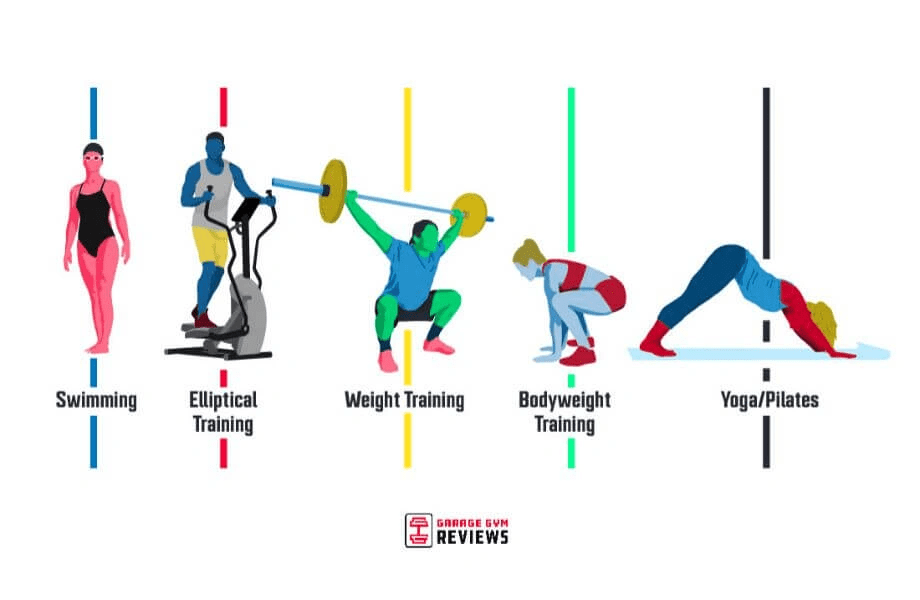
Cross-training options during injury
Cross-training lets you focus on different exercises that complement your main sport. This helps you avoid overuse while building resilience. It prevents deconditioning—the fitness loss that comes with long periods of inactivity. This strategy works well to treat common injuries like stress fractures, tendonitis, or joint issues.
Your specific injury determines which cross-training options might work best:
- Swimming: The water’s buoyancy reduces body weight by up to 90%, which lets you move freely without compression forces. Swimming works great to treat lower-body injuries like ankle sprains or knee problems.
- Cycling: Stationary or outdoor cycling offers adjustable intensity that matches your recovery stages. The smooth, circular motion works your legs without impact, which helps maintain quad and hamstring strength during hip or knee rehabilitation.
- Elliptical machines: These give you a running-like motion with zero impact, making them great to treat lower-limb injuries. The gliding motion exercises your whole body while protecting your joints.
- Rowing: This gives you a complete workout. It works your back, arms, core, and legs in a seated, fluid motion that protects your joints. Rowing works particularly well to treat upper-body or spinal injuries.
The best cross-training activity depends on what you can do comfortably rather than preset activities based only on injury type. Sports medicine specialist Dr. Jotwani says: “I typically recommend strength training as part of any injury rehab exercise regimen because it helps ensure the muscles and joints throughout the body can help support the injured area during and after recovery“.
How to keep cardiovascular fitness up
Your cardiovascular fitness during injury rehab serves two key purposes: it keeps your conditioning level and helps healing. Research shows you can maintain fitness even during recovery by exercising at about 70% of your VO2 max at least once weekly.
The best results come from matching what you’d do if uninjured. Here’s how:
- Switch a long slow run with a long slow bike ride or swim
- Do interval or tempo sessions in your cross-training activity
- Match training length and intensity to get similar heart benefits
You have options for cardiovascular training even when you can’t bear weight directly. Aqua jogging copies running motion without impact. As you recover, an AlterG anti-gravity treadmill lets you run at reduced body weight percentages, starting as low as 75% and going up gradually.
A complete cross-training routine might have:
- Non-impact cardiovascular work 3-4 times weekly
- Strength training that targets uninjured areas 3-4 times weekly
- Flexibility and mobility work through yoga or Pilates
One effective heart workout pattern includes: 4 sets of 4-minute high-intensity efforts with 2-minute rest breaks between sets. On top of that, short interval training such as 10-20 repetitions of 1-minute high-intensity efforts followed by 1-minute recovery periods can keep you conditioned.
Best low-impact exercises for recovery
Low-impact exercises reduce joint stress while still giving you challenging workouts. These activities help during rehabilitation as they lower the risk of making injuries worse.
Swimming stands out as a top rehabilitation choice. Beyond heart benefits, it works your whole body while water supports your weight. This cuts down joint stress while building strength, flexibility, and coordination. Different strokes work different muscle groups, adding variety to your routine.
Yoga and Pilates focus on controlled movements, breathing, and proper form – building flexibility, balance, and core strength with minimal impact. These practices work well to treat soft-tissue injuries and teach mindfulness that can reduce pain. They also complement almost any other exercise to boost efficiency and results.
Walking proves remarkably effective despite its simplicity. It stresses knees less than running, especially on tracks or trails instead of concrete. Walking outdoors also improves mood and reduces stress—mental benefits that help recovery.
Stationary bikes need very little force with limited joint impact. New models offer various programs with adjustable speed, incline, and resistance that match your recovery stage. A 2019 study found that indoor cycling can improve aerobic capacity, blood pressure, lipid profile, and body composition without dieting.
Note that you should build back gradually with any exercise. Dr. Jotwani suggests, “I’d rather you work at a lower intensity and be able to work out the next day than overdo it and be out for a few days or a week because you’re too sore or you re-injure something“.
Start Rehab as Early as Possible
Starting rehabilitation as soon as doctors allow plays a key role in speeding up recovery from sports injuries. Modern sports medicine no longer recommends extended rest periods. Instead, it focuses on timely rehabilitation to help healing and prevent complications.
Why early rehab matters
Starting rehab soon after an injury does more than just speed up recovery time. Research shows that safe therapeutic exercises can accelerate recovery, even within days of injury. This helps prevent joints from getting stiff, muscles from weakening, and too much scar tissue from forming – common problems with long periods of rest.
Early intervention gives these benefits:
- Less pain and swelling through targeted techniques
- Protection against muscle loss and joint stiffness
- Better blood flow and tissue repair
- Lower risk of re-injury through proper mechanics
Athletes who got early treatment returned to play 25% faster than those who waited, according to a study in the Journal of Athletic Training. Quick physical therapy helps keep motion range and reduces stiffness that could make recovery take longer.
Time becomes even more important for competitive athletes. Elite sports put pressure on athletes to come back quickly – both from themselves and their teams. Early rehab gives a well-laid-out approach to get both the athlete and injured tissue ready for the physical and mental demands of high-level competition.
Home rehab vs. professional therapy
Research shows similar results for many conditions in both home-based and professional outpatient rehabilitation. A complete review found no major differences in key outcomes—including motion range, functional scores, and quality of life – between these approaches.
Home-based rehabilitation proved economical, saving 316 pounds per case in one study. Many athletes and active people find this cost saving attractive.
Professional therapy shines through expert guidance and special equipment. Home rehabilitation offers comfort, flexible scheduling, and often makes patients more motivated to stick with it. Several factors help decide what’s best:
- How bad and complex the injury is
- The athlete’s knowledge and discipline
- Support systems available
- Learning style priorities
Consistency matters most, whatever you choose. Stretching works best when done at least two to three times each week. Even 5-10 minute sessions can make real improvements.
Exercises to regain flexibility and strength
A complete rehab program moves through several phases. It starts with motion range exercises and builds up to sport-specific training.
The first stage usually focuses on getting joint mobility back. Gentle stretching improves flexibility best after workouts while tissues stay warm. Static stretches should last 15-30 seconds for the best results.
Strength training becomes key as recovery moves forward. Muscles get weaker from not being used after an injury. Isometric exercises (muscle contractions without movement) work well first because they help control pain.
A balanced program should include:
- Motion range exercises: Supine lumbar twists, child’s pose, and gentle back extensions
- Strength work: Begin with static contractions before moving to resistance training
- Building endurance: Add low-impact aerobic activities like stationary biking
The exercise plan should first work on balance, reflex control, and rebuilding nerve-muscle function. As healing progresses, you can move toward harder strength, endurance, and nerve-muscle retraining.
Natural healing takes time. Balance proper loading with rest periods to protect healing tissue. Your body will tell you when something’s wrong—modify or reduce exercise intensity if pain increases.
Look at the Bigger Picture
Athletes need more than physical rehabilitation to recover fully. Your lifestyle choices play a huge role in how fast you bounce back from injuries. A better understanding of these elements helps create a solid base for faster healing and long-term performance.
How sleep affects injury recovery
Sleep is the life-blood of effective injury healing. Your body releases growth hormone during deep sleep phases to speed up tissue repair and muscle recovery. Not getting enough sleep increases pain-causing agents like interleukin-6 and C-reactive protein, which slow down muscle recovery from intense training.
Athletes who don’t get 8 hours of sleep each night face a 1.7 times higher injury risk than those who rest well. This works both ways – poor sleep raises injury risk and slows down rehabilitation. You’ll find yourself in a tough cycle since sleep links closely to anxiety and depression, which could lead to injury.
Poor sleep does more than just slow tissue repair. It throws off your glucose metabolism, which can hurt glycogen replacement and protein synthesis – both crucial for recovery. Research shows sleep-deprived athletes had much lower muscle glycogen before exercise (209 ± 60 mmolkg−1 dw) compared to well-rested ones (310 ± 67 mmolkg−1 dw).
Nutrition and hydration tips for healing
Good nutrition helps reduce injury risk, speeds up recovery, and shortens rehab time. Your body needs extra nutrients after an injury – especially protein, vitamins, and minerals – to fix damaged tissues.
Here’s what you should do for the best recovery:
- Prioritize protein intake: Non-athletes should eat 1.3-1.8 grams of protein per kilogram of body weight daily during recovery. Athletes might need 1.6-2.5 g/kg/day. Spread this out with 25-30g at each meal.
- Include anti-inflammatory foods: Foods rich in Omega-3 like walnuts, tuna, and flaxseeds cut down inflammation and help build muscle protein.
- Boost vitamin C consumption: This antioxidant fights inflammation while helping tissue growth and bone repair. Stick to food sources instead of supplements – too much supplemental vitamin C might slow healing.
- Maintain zinc levels: You need zinc at almost every stage of wound healing. Try beef, oysters, fortified cereals, eggs, and lentils.
Staying hydrated matters just as much – dry skin becomes fragile and affects blood flow to tissues. Try to drink 1.5-2 liters (6-10 cups) of fluid daily, mostly water, milk, fruit juices, and soups. Keep your caffeine intake to 3 cups daily since it can dehydrate you.
Avoiding social habits that delay recovery
Your social support network makes a big difference in both physical and mental recovery from sports injuries. All the same, some social patterns can slow down healing.
Research shows that biopsychosocial factors like sleep quality, academic pressure, social stress, and mental health affect how soon you can return to play. College athletes face special challenges as their social commitments combined with training affect recovery time.
Sleep becomes even more crucial when you’re dealing with stress during recovery. College athletes who got good sleep (≥8 hours nightly with high sleep quality scores) handled stress much better.
Keep your alcohol intake within recommended limits (maximum 14 units weekly). Alcohol makes you pee more, which leads to dehydration and might slow tissue repair. Social influences can also lead to poor food choices that work against healing.
Building a supportive environment that values good sleep, proper nutrition, and stress management helps tap into the full potential of sports injury recovery.
Comparison Table
| Method | Main Purpose/Benefit | Key Components/Actions | Timing/Duration | Research-Backed Benefits | Important Considerations |
| Understand Your Injury | Get the right treatment by knowing what’s wrong | – Identify injury mechanism- Assess symptoms- Get professional diagnosis | Quick assessment right after injury | Quick identification helps start treatment sooner and stops things from getting worse | – Stop working out if you feel pain- Your biggest risk factor is having been hurt before |
| Give Your Injury What It Needs | Keep swelling down and help healing | RICE method:- Rest- Ice- Compression- Elevation | First 72 hours matter most; RICE works best early on | A “3 out of 10” pain level helps healing without causing more damage | Don’t rest completely for more than 48-72 hours with most injuries |
| Maintain Fitness Through Alternative Activities | Stay in shape while you heal | – Swimming- Cycling- Elliptical- Rowing | Do cardio 3-4 times weekly;strength work 3-4 times weekly | Better blood flow from cross-training speeds up healing | Work out at 70% of VO2 max once weekly at least to keep your fitness |
| Start Rehab as Early as Possible | Speed up recovery and avoid complications | – Range of motion exercises- Strengthening work- Endurance building | Start when doctors say it’s safe | Athletes who start treatment early get back to play 25% faster | Mix the right amount of activity with rest periods |
| Look at the Bigger Picture | Fix lifestyle issues that affect healing | – Sleep management- Proper nutrition- Social support | Keep this up throughout recovery | Athletes who sleep 8+ hours have a 70% lower chance of injury | Athletes need 1.6-2.5g/kg/day of protein while recovering |
Conclusion
Sports injury recovery needs a systematic approach instead of just waiting for natural healing. This piece outlines five proven methods that substantially speed up recovery. Athletes must understand their injury to create an effective treatment plan that targets specific mechanisms of their condition. The RICE method plays a vital role in the acute phase. Modern approaches suggest limiting complete rest to 48-72 hours and then slowly adding movement.
Recovery happens faster when athletes stay fit through different activities. They also prevent the usual deconditioning that happens during injury periods. Low-impact options like swimming, cycling, and elliptical training help maintain cardiovascular fitness without hurting healing tissues. Starting rehabilitation as soon as medically cleared prevents joint stiffness and muscle atrophy. It also promotes proper tissue repair.
Your lifestyle choices can dramatically affect recovery time. Good sleep triggers growth hormone release to speed up tissue repair. A proper diet with enough protein gives your body the materials it needs to heal. Managing stress, staying hydrated, and maintaining social connections are vital parts of optimizing recovery.
These five methods work together to create better results. Professional athletes use these approaches in a planned way. This explains why they bounce back quickly from injuries that keep recreational athletes sidelined for months. Your body responds best to a complete strategy that fixes both the injury and creates ideal healing conditions.
Note that patience is essential even with these recovery-boosting techniques. Getting back too soon definitely leads to re-injury and possible long-term problems. You should balance your desire to return with respect for natural healing times. Recovery from sports injuries ended up being about treating the whole athlete—physically, nutritionally, and mentally.